
Cycling Injuries

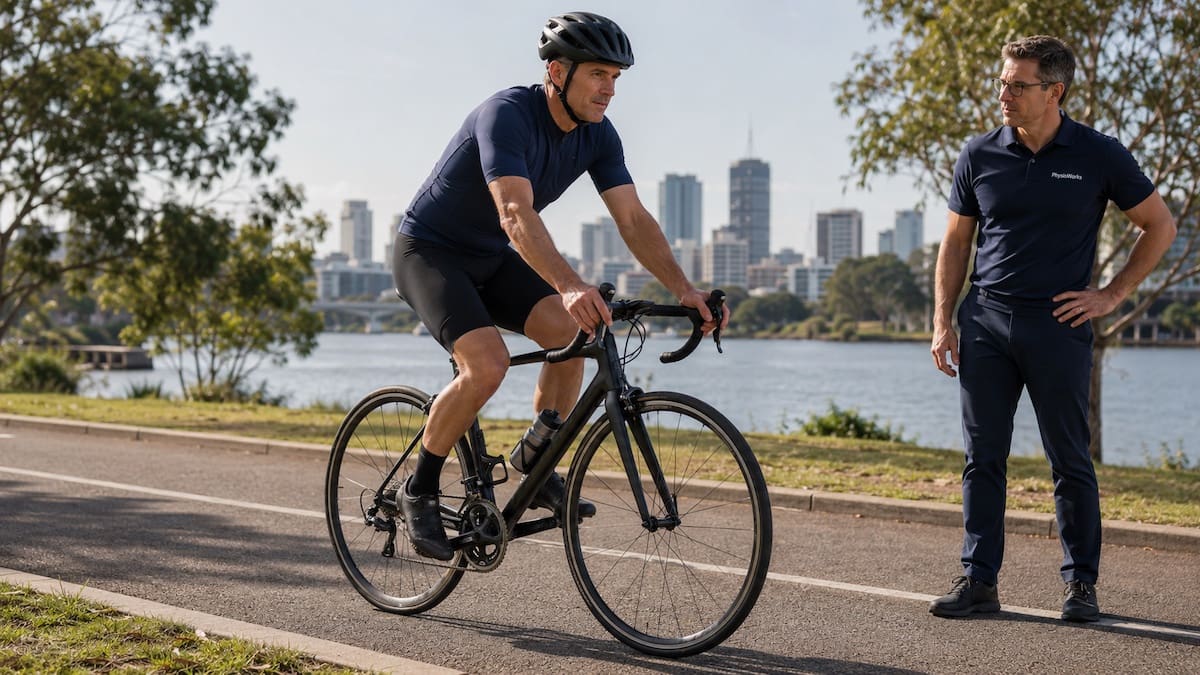
Cycling injuries may reflect the interaction between riding load, physical capacity and bike position.
Cycling injuries may develop after a crash or build gradually through repeated pedalling, long periods in one posture, rapid training changes or an unsuitable bike position. Knee pain and lower back pain are common, while cyclists may also develop neck, shoulder, hand, hip, calf or foot symptoms.
Most cycling pain does not come from one factor alone. Bike setup, training load, tissue capacity, riding position, strength, mobility and recovery often interact. This guide explains common cycling injury patterns, practical prevention steps and when to seek professional assessment.
Quick Answer
Cycling injuries often occur when riding load rises faster than the body can adapt. A bike-fit issue may add repeated stress, but symptoms can also reflect limited strength, mobility, recovery or tolerance to long rides and harder efforts.
Reduce the aggravating load, avoid sudden training spikes and seek assessment when pain keeps returning, affects your riding or causes numbness, weakness or loss of control.
Explore Cycling and Endurance Sport Support
Use these pathways to find related injury, sport and bike-fit information.
What Are Cycling Injuries?
Cycling injuries include traumatic injuries from falls and overuse problems caused by repeated loading. The knees and hips produce and transfer power, while the spine, shoulders and arms support the rider and control the bike.
Road cycling usually involves prolonged flexed posture and thousands of repeated pedal strokes. Mountain biking adds vibration, impacts, rapid body-position changes and a higher risk of falling. Triathletes must also manage the combined load of swimming, cycling and running.
How Common Are Cycling Injuries?
Research suggests that non-traumatic overuse problems make up a substantial part of cycling injury presentations. The knee is commonly affected, while lower back, neck, hand, hip and saddle-area symptoms also occur.
Competitive riders may face high weekly training loads. However, recreational cyclists can also develop symptoms after increasing distance, adding hills, returning from a break or spending longer than usual in an unfamiliar riding position.
Where Does Cycling Pain Occur?
The location and timing of pain can provide useful clues, although they do not confirm a diagnosis.
Pain During Climbs
Long climbs and harder gears increase demand through the knees, quadriceps, calves and Achilles region. Symptoms may build when climbing volume or intensity rises quickly.
Pain in the Drops
A low or long cockpit position can increase demand on the neck, shoulders, hands and lower back, particularly when mobility or postural endurance is limited.
Pain After Long Rides
Symptoms that appear late in a ride may reflect fatigue, sustained pressure, reduced movement variation or a mismatch between current capacity and ride duration.
Pain in Hard Gears
Low cadence and high resistance can increase force through the knees and hips. A sudden change to hill work, intervals or harder gearing may provoke symptoms.
Numb Hands or Feet
Pressure through the handlebars, footwear or contact points may irritate nerves or restrict comfort. Position, grip, shoe fit and ride duration can all contribute.
Pain After a Crash
Falls may cause fractures, concussion, cuts, joint injuries or muscle damage. Persistent pain, swelling, deformity or loss of function requires medical assessment.
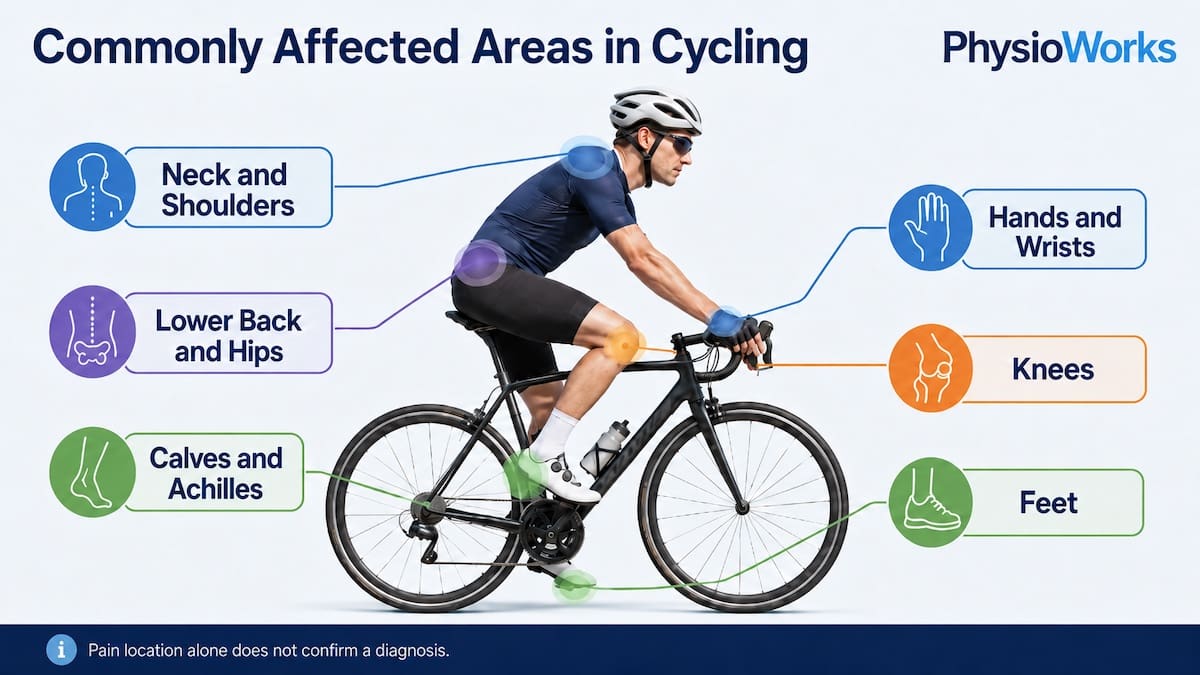
Cycling symptoms commonly affect the knees, spine, upper limbs and contact points. Pain location alone does not confirm a diagnosis.
Which Cycling Injuries Are Common?
Cyclists may develop different problems depending on riding volume, posture, bike setup, terrain, previous injury and physical capacity. These links provide more information about common conditions affecting each body region.
Knee and Thigh
Repeated pedalling places high cumulative demand through the kneecap, tendons and outer knee.
Back, Hip and Pelvis
Hip position, spinal endurance and sustained riding posture can influence back, buttock and hip symptoms.
Neck and Upper Limb
The upper body supports riding posture and absorbs sustained pressure through the handlebars.
Calf and Foot
Pedalling, climbing, footwear and cleat position can increase load through the calf, Achilles tendon and foot.
Why Do Cycling Injuries Develop?
Cycling injuries usually develop when total stress exceeds the body’s current capacity. The stress may come from training, bike position, repeated movement, poor recovery or several smaller factors acting together.
Common contributors include:
- a sudden increase in weekly distance
- adding hills, intervals or racing too quickly
- returning to normal training after time away
- long rides without enough recovery
- limited hip, spinal or ankle mobility
- reduced trunk or lower-limb strength
- a new bike, saddle, cleat or shoe setup
- prolonged pressure through the hands, feet or saddle
- continuing to ride while changing movement to avoid pain
Why Do Cyclists Get Knee Pain?
Cycling knee pain often develops when repeated pedalling load combines with a rapid training increase, reduced tissue capacity or a bike-position issue. Saddle height, saddle setback, cleat position and the use of harder gears can change how force passes through the knee.
The pain location may vary. Front, inner, outer or back-of-knee symptoms can have different contributors. Persistent symptoms should be assessed rather than managed through bike changes alone. Visit the knee pain hub for broader knee information.
Why Does My Neck or Back Hurt When Cycling?
Neck and back pain may develop when the rider holds one posture for too long or cannot comfortably tolerate the bike’s reach and handlebar height. Limited hip mobility, reduced spinal movement and low trunk endurance can also increase strain.
Symptoms often become more obvious during longer rides, when riding in the drops, on rough surfaces or after a sudden increase in distance. Persistent symptoms may need both a physical assessment and a review of bike position.
Why Do My Hands or Feet Go Numb?
Hand or foot numbness may occur when sustained pressure irritates a nerve or concentrates force through a small contact area. Handlebar position, grip pressure, gloves, shoe fit, cleat position and ride duration can all play a role.
Change position regularly and avoid continuing through worsening numbness. Seek assessment if symptoms persist off the bike, spread, cause weakness or affect bike control.
Bike Fit and Cycling Injuries
A professional bike fit physiotherapy assessment may help when symptoms consistently appear in the same area or at a similar point during each ride. The assessment can consider both the bicycle and the rider rather than changing equipment in isolation.

A Bike Fit assessment can consider bike position, movement, symptoms and current riding demands.
Relevant factors may include:
- saddle height, tilt and setback
- handlebar height and reach
- cleat position and foot angle
- shoe fit and foot support
- crank and cockpit setup
- riding posture and movement strategy
- strength, flexibility and previous injury
- training history and current ride demands
Our professional bike-fit options guide explains the available assessment pathways.
Can Equipment Changes Cause Pain?
Yes. A new bike, saddle, cleat position, shoe or handlebar setup can change how load moves through the body. Even a small change may become important when repeated over thousands of pedal strokes.
However, equipment is only one part of the picture. Avoid repeatedly changing several settings at once. That approach makes it difficult to identify what helped and may create a new problem elsewhere.
Beginner and Experienced Cyclists Face Different Risks
New cyclists often develop symptoms because their riding tolerance is still building. An unfamiliar posture, rapid distance increase or early enthusiasm for hills and group rides can quickly exceed current capacity.
Experienced cyclists may tolerate more riding but accumulate stress through high kilometres, racing, repeated hard sessions or limited recovery. A long training history does not fully protect against sudden load changes.
How Can Cyclists Reduce Injury Risk?
Build Load Gradually
Increase distance, hills or intensity in manageable steps. Avoid changing several training variables during the same week.
Review Bike Position
Check the saddle, cockpit, cleats, shoes and contact points when symptoms repeatedly occur in the same riding situation.
Develop Capacity
Strength work for the hips, legs, calves and trunk may improve tolerance to climbing, acceleration and longer rides.
Plan Recovery
Allow time between demanding sessions. Sleep, food, hydration and easier training days all support adaptation.
Other useful habits include varying hand position, using suitable gearing, pacing climbs, checking tyre and equipment condition and responding early to recurring symptoms. See our practical cycling injury prevention tips and broader injury prevention essentials.
How Can Physiotherapy Help Cycling Injuries?
Physiotherapy aims to identify the main factors driving the symptoms. Assessment may include the injury history, training changes, movement, strength, mobility, nerve symptoms, functional tests and bike-position screening.
Management depends on the presentation. It may include:
- temporary changes to distance, intensity or terrain
- guidance on what riding remains suitable
- mobility or strength exercises
- graded tissue loading
- posture and movement strategies
- bike-fit recommendations
- a staged return to normal training
Physiotherapy cannot remove every risk from cycling. However, it may help the rider understand the problem, restore capacity and make informed decisions about training and bike setup.
How Should I Return to Cycling After Injury?
A gradual return usually works better than immediately resuming normal distance and intensity. The exact progression depends on the injury, symptoms and time away from riding.
Restore Daily Function
First, ensure walking, stairs, work and normal daily activity are manageable for the type of injury involved.
Start With Easy Riding
Begin with a short, low-resistance ride on a predictable route or stationary bike where suitable.
Increase Duration First
Build comfortable riding time before adding hard gears, long climbs, sprinting or technical terrain.
Reintroduce Intensity
Add hills, intervals, group riding or off-road demands in stages rather than all at once.
Review the Response
Monitor symptoms during the ride and later that day. Adjust the next session if pain, swelling, numbness or altered movement increases.
When Should You Seek Assessment?
Arrange an assessment when symptoms:
- keep returning during similar rides
- are worsening despite reduced training
- change your pedalling or riding posture
- cause persistent numbness, tingling or weakness
- affect sleep or normal daily activity
- prevent you from rebuilding normal riding
Seek Urgent Medical Care After a Crash If You Have
- loss of consciousness, confusion or worsening headache
- neck pain with neurological symptoms
- obvious deformity or suspected fracture
- severe swelling or inability to bear weight
- chest pain, breathing difficulty or abdominal pain
- progressive weakness, numbness or loss of coordination
Why Do Cycling Injuries Keep Coming Back?
Symptoms may settle with rest but return when the original training load, bike position or movement pattern has not changed. Recurrence can also occur when pain improves before strength and riding tolerance have recovered.
A practical plan should address both sides of the problem: reduce the aggravating stress and rebuild the capacity needed for the rider’s usual distance, terrain and intensity.
Related Cycling Resources
- Bike Fit Brisbane
- Professional Bike Fit Options
- Cycling Injury Prevention Tips
- Triathlon Injuries
- Running Injuries
- Knee Pain
- Lower Back Pain
- Hand and Wrist Pain
What to Do Next
Reduce the part of your riding that clearly aggravates the problem, but avoid making repeated bike changes without a plan. Record when symptoms begin, where they occur and whether they settle after the ride.
A physiotherapist can assess the injury, review contributing factors and guide a gradual return. A bike-fit assessment may also help when symptoms appear consistently in one position or at a predictable point during each ride.
Cycling Injuries FAQs
What causes cycling knee pain?
Cycling knee pain may relate to a rapid increase in riding load, harder gears, limited tissue capacity or bike-position factors such as saddle height and cleat position. The location of the pain can suggest different contributors, but it does not confirm a diagnosis.
Can a bike fit help a cycling injury?
A bike fit may help when symptoms repeatedly occur in the same position or at a similar point during a ride. The assessment works best when it also considers training load, mobility, strength, previous injuries and the rider’s goals.
Why does my neck or back hurt when I ride?
Neck or back pain may reflect prolonged posture, limited hip or spinal movement, low trunk endurance or a cockpit position that is difficult to tolerate. Longer rides, low handlebars and recent training increases may make symptoms more obvious.
Should I keep cycling with knee or back pain?
It depends on the injury and symptom response. Mild symptoms may allow modified riding, while worsening pain, altered movement, swelling, numbness or weakness are reasons to stop and seek assessment. Avoid repeatedly pushing through symptoms that increase each ride.
How should I return to cycling after an injury?
Start with shorter, easier rides and build duration before hills, intervals, hard gears or technical terrain. Monitor symptoms during the ride and afterwards. Progress only when the current level remains manageable.
When should I stop riding and get assessed?
Seek assessment if pain worsens, keeps returning, affects sleep, changes your pedalling or causes numbness or weakness. After a crash, urgent medical care may be needed for suspected fracture, concussion, severe swelling or neurological symptoms.
Choose your clinic and appointment pathway
Select a PhysioWorks clinic to continue to live booking, an appointment request or reception assistance.


References
- Dettori NJ, Norvell DC. Non-traumatic bicycling injuries: a review of the literature. BMJ Open Sport Exerc Med. 2020;6(1):e000840. doi:10.1136/bmjsem-2020-000840.
- Priego Quesada JI, Kerr ZY, Bertucci W, et al. Relationship between bicycle configuration and cyclist discomfort, pain, and injury: a systematic review. Sci Rep. 2023;13:8928. doi:10.1038/s41598-023-35728-x.
