
Achilles Tendinopathy


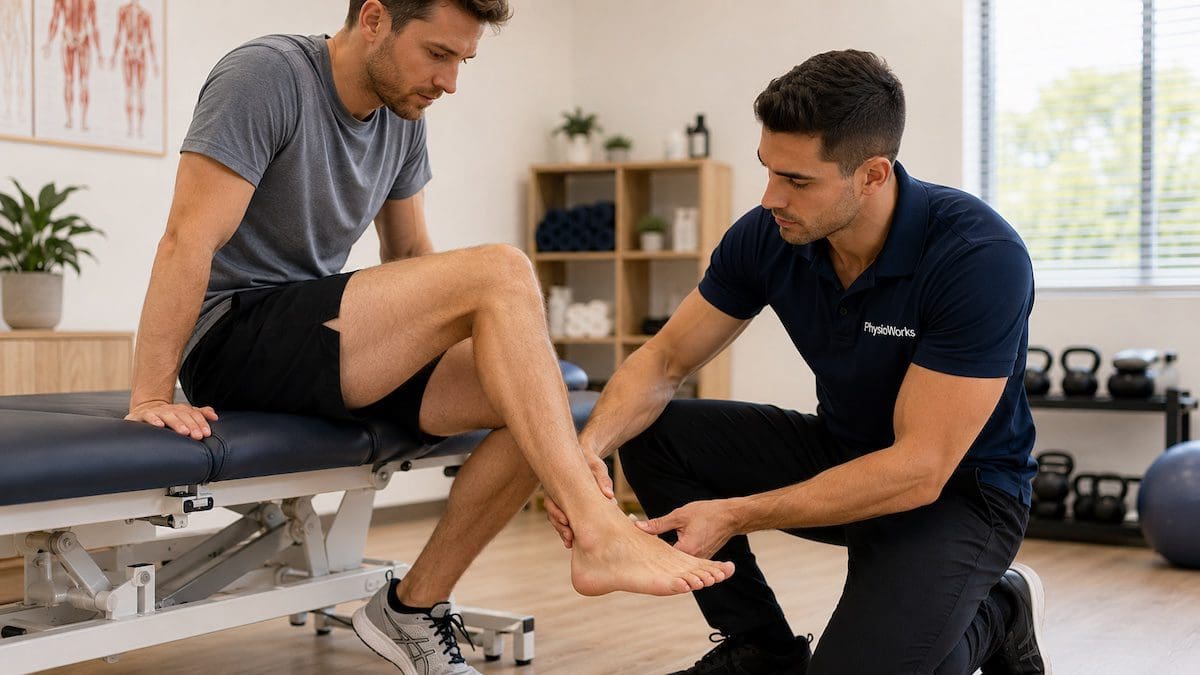
Physiotherapy assessment for Achilles tendon pain, stiffness and loading tolerance.
Achilles Tendinopathy Treatment and Recovery
Achilles tendinopathy treatment aims to reduce pain, restore calf strength, and rebuild tendon capacity. It commonly follows overload, sudden training changes, or repeated running, jumping, hill work, or sport loading.
Many people ask whether they should rest completely. In most cases, complete rest slows progress. A better plan often combines modified activity, progressive calf loading, and a staged return to walking, running, work, or sport.
Helpful background pages include heel pain, calf pain, and running injuries.
Should You Rest or Keep Loading the Achilles Tendon?
Complete rest is not usually the best long-term strategy for Achilles tendinopathy.
Many people improve with modified activity, progressive calf loading, and gradual return to running rather than stopping all movement completely.
What Is Achilles Tendinopathy?
Achilles tendinopathy is persistent pain and reduced function in the Achilles tendon. This strong tendon connects the calf muscles to the heel bone and helps you walk, run, jump, and push off.
Although many people still use the term “Achilles tendonitis”, the problem is often linked to overload and reduced tendon tolerance rather than simple inflammation alone.
The two main types are:
- Mid-portion Achilles tendinopathy: pain in the middle section of the tendon.
- Insertional Achilles tendinopathy: pain where the tendon attaches to the heel bone.
Sometimes pain comes from the tissue around the tendon, often called paratendinopathy. A physiotherapist can assess the likely driver and match rehab to the right structure.
Why Does Achilles Tendinopathy Happen?
Tendons adapt to load. Symptoms often start when load exceeds what the tendon can recover from, especially when training changes happen too quickly.
Signs Your Achilles May Be Overloaded
- Morning stiffness that takes longer to ease
- Pain that increases after hills, speed work, or jumping
- Tenderness when squeezing the Achilles tendon
- Symptoms that settle during activity but return later
- Reduced confidence with hopping, stairs, or running
Common risk factors include:
- previous Achilles tendon pain or calf injury
- reduced calf strength or endurance
- sudden spikes in running, sprinting, jumping, or hill work
- return to sport after a break
- footwear changes
- ankle stiffness or reduced movement control
Related pages include ankle pain, heel pain, and leg pain.
How Is Achilles Tendinopathy Diagnosed?
A physiotherapist may assess Achilles tendinopathy using your symptom history, tendon palpation, calf strength testing, hopping tolerance, ankle movement, and functional loading tests.
Imaging is not always required. Ultrasound or MRI may help when symptoms persist despite rehab, when pain behaves unusually, or when another diagnosis is suspected.
What Are the Symptoms?
- morning Achilles pain or stiffness
- pain with running, hills, hopping, stairs, or jumping
- local tendon tenderness
- tendon thickening or swelling
- symptoms after sudden training increases
- pain that warms up during activity but returns later
When Should You Seek Urgent Care?
Seek urgent medical care if you felt a sudden pop, had sharp pain like being kicked in the back of the ankle, or cannot push off normally when walking.
These signs may suggest an Achilles tendon rupture rather than tendinopathy.
What Are the Treatment Options?
1) Exercise-Based Rehabilitation
Progressive tendon-loading exercise remains the cornerstone of recovery. Most programs begin with controlled calf raises and heel-loading variations before progressing toward heavier resistance, faster movements, and sport-specific loading.
| Rehab Stage | Main Goal | Typical Focus |
|---|---|---|
| Settle symptoms | Reduce flare-ups | Modified walking, gentle calf loading, pain monitoring |
| Rebuild strength | Improve tendon capacity | Calf raises, heavy slow resistance, ankle control |
| Return to running | Reload safely | Graded running, hill control, speed-work progression |
| Return to sport | Handle high tendon loads | Hopping, jumping, sprinting, sport-specific drills |
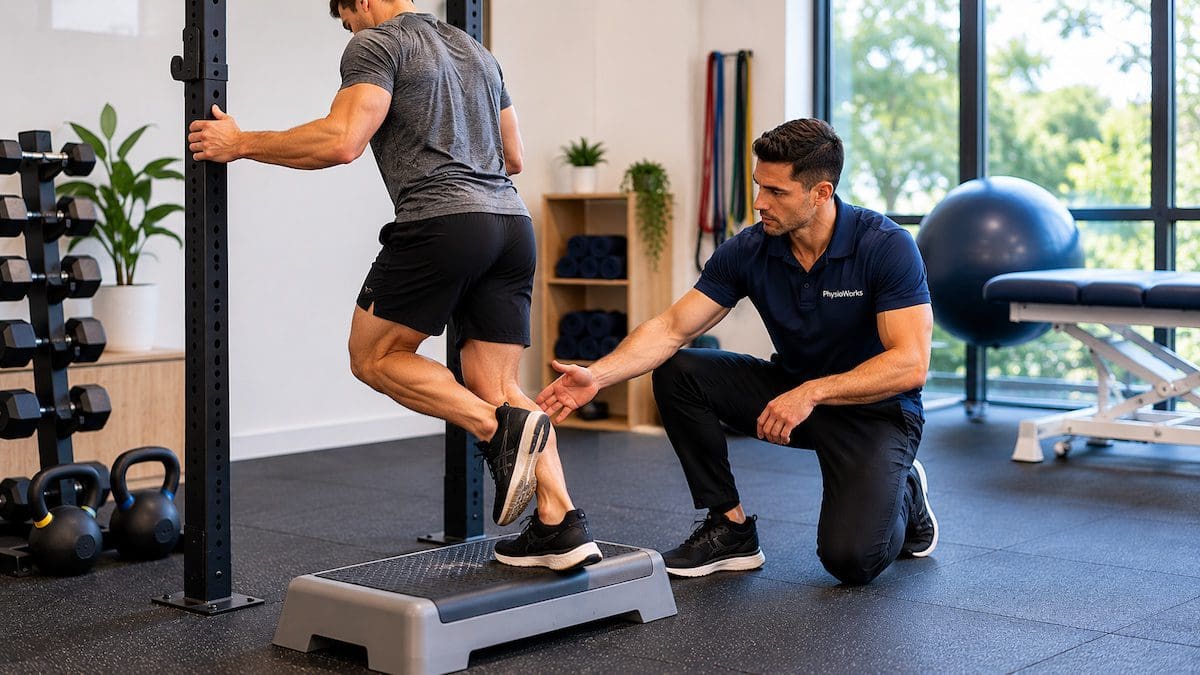
Progressive calf loading helps build Achilles tendon strength.
2) Load Management
Instead of complete rest, many people improve by reducing the activities that flare symptoms while gradually rebuilding tendon capacity. This may mean temporarily reducing hills, speed work, jumping, long runs, or back-to-back hard sessions.
3) Supportive Strategies
- heel lifts or footwear changes may reduce tendon compression
- shockwave therapy may help some persistent cases
- injections show mixed evidence and need careful discussion
- running technique, training volume, and recovery habits may need review
Most Achilles Rehab Should Feel Progressive, Not Random
Achilles tendinopathy usually improves best when loading is planned, measured, and adjusted to symptoms.
A staged program can help you build confidence while reducing the cycle of rest, flare-up, and repeat pain.
Can You Keep Running With Achilles Tendinopathy?
Often, yes. However, running load needs to match tendon tolerance. Many runners temporarily reduce hills, speed work, distance, and back-to-back hard sessions while they rebuild calf strength.
A simple guide is to monitor symptoms during activity, later that day, and the next morning. If pain or stiffness rises and stays elevated, the tendon may need less load or a slower progression.
You may also find common tendon injuries, overuse injuries, and load management useful.
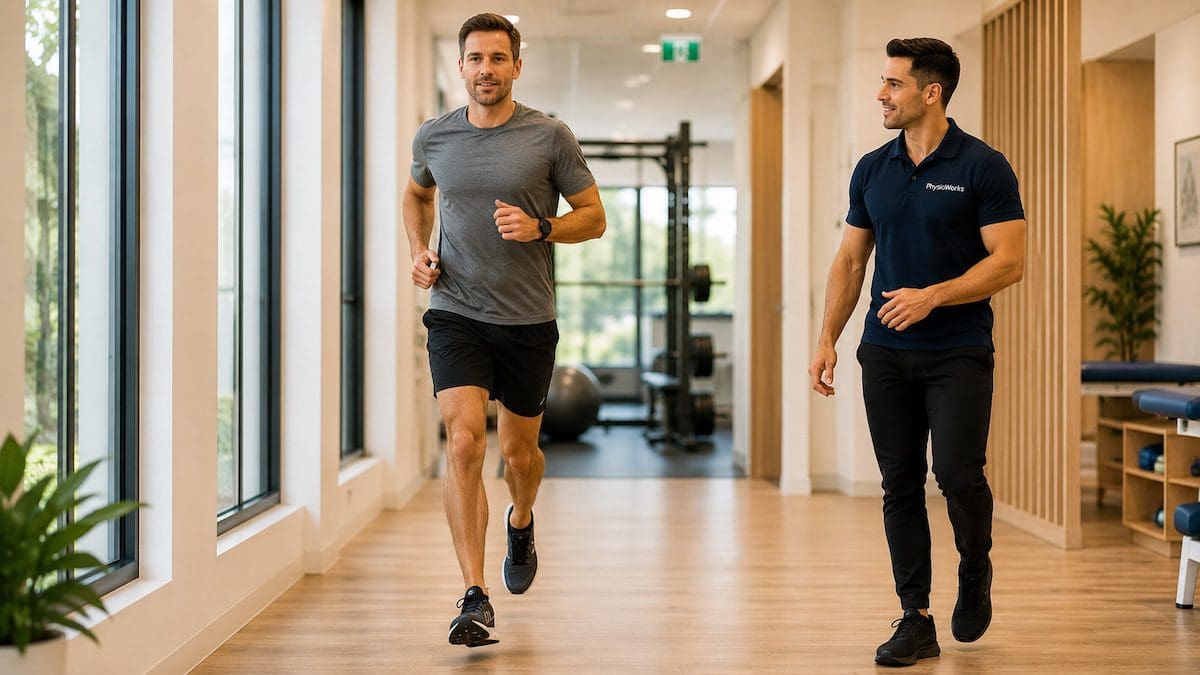
Safe return-to-running progression after Achilles rehabilitation.
What to Do Next
If Achilles pain keeps returning, start with a clear plan. Track what triggers symptoms, reduce the worst aggravators temporarily, and begin progressive calf loading.
If pain persists, if you cannot hop comfortably, or if training keeps breaking down, a physiotherapist can assess contributing factors and guide a staged return to running, work, and sport.
Choose your clinic and appointment pathway
Select a PhysioWorks clinic to continue to live booking, an appointment request or reception assistance.
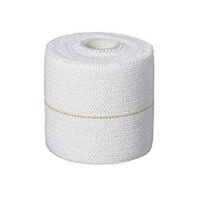
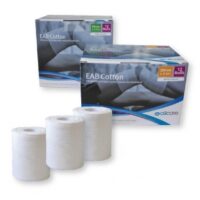
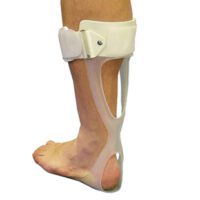
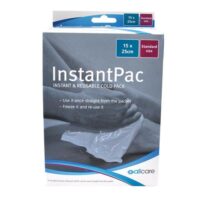
Calf Products
These calf products are commonly used by our physiotherapists to improve strength, provide comfort, improve flexibility, plus assist home exercise programs.
-
-
- Liniments & Gels, Massage Liniments, Pain Management
Fisiocrem
$16.95 – $39.95Select optionsQuick View -
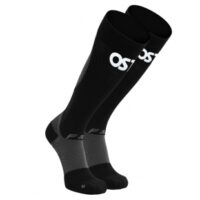
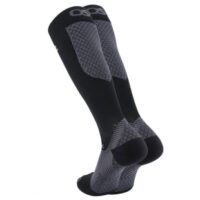 Ankle, Braces & Supports, Calf, Foot
Orthosleeve Compression Bracing Socks
$49.00Select optionsQuick View -
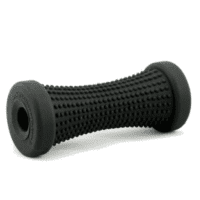
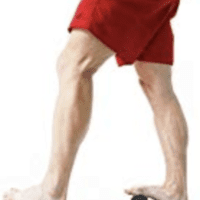 Gift Ideas, Christmas Gift Ideas, Exercise Equipment, Foot, Knee, Massage Tools, Pain Management
Footeez Lockeroom
$45.00Add to cartQuick View -
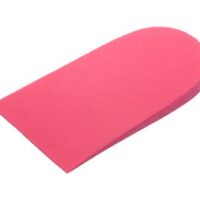
- EMS Machines, Pain Management, TENS Machine, TENS Machine & EMS
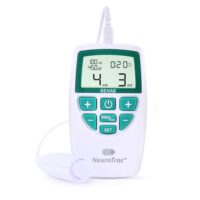
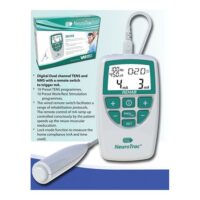
NeuroTrac Rehab (TENS Machine + EMS)
$299.95Add to cartQuick View -
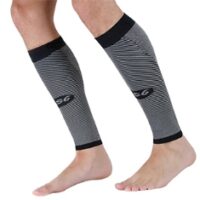
-
-
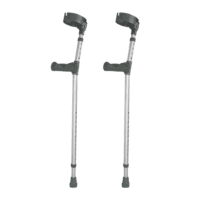 Ankle, Back, Braces & Supports, Calf, Foot, Groin, Heel, Hip, Knee, Thigh, Walking
Forearm Crutches
$64.00Select optionsQuick View -

-
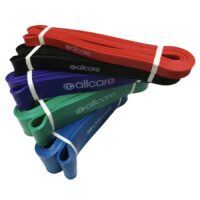
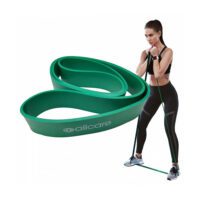 Exercise Equipment, Resistance Band
AllCare Powerloop Bands
$22.00 – $65.00Select optionsQuick View -
-
-

Achilles Tendinopathy FAQs
How long does Achilles tendinopathy take to improve?
Many people notice improvement over 8–16 weeks with consistent rehabilitation and sensible load progression. Longer-standing cases may need more time, especially if running volume, calf strength, or tendon tolerance has dropped.
Can I keep running with Achilles tendinopathy?
Often, yes. Many runners continue with modified training while reducing hills, speed work, and sudden load spikes. Your response the next morning is a useful guide to whether the tendon tolerated the session.
What exercises work best for Achilles tendinopathy?
Progressive calf raises, heavy slow resistance, and staged tendon-loading programs are commonly used. The best starting point depends on pain level, tendon location, strength, and activity goals.
What is the difference between insertional and mid-portion Achilles tendinopathy?
Insertional symptoms occur at the heel attachment. Mid-portion symptoms sit higher in the tendon body. This distinction matters because some exercises and stretches may need adjustment for insertional pain.
When should I consider imaging?
Imaging may help when symptoms persist despite rehabilitation, when pain behaves unusually, or when another diagnosis is suspected. Many cases can still be assessed and managed without imaging.
When should I worry about an Achilles rupture?
Seek urgent care if you felt a pop, had sudden sharp pain, or cannot push off normally. These symptoms may suggest rupture rather than tendinopathy.
Related Articles
References
- Chimenti RL, Neville C, Houck J, Cuddeford T, Carreira D, Martin RL. Achilles pain, stiffness, and muscle power deficits: midportion Achilles tendinopathy revision 2024. J Orthop Sports Phys Ther. 2024;54(12):CPG1-CPG32.
- Ko VMC, Cao M, Leung T, Fu SN. Conservative treatments for insertional Achilles tendinopathy: a systematic review and network meta-analysis. Sports Med Open. 2023.
- Feeney KM, Punnoose A, Pomeroy E, et al. The effectiveness of extracorporeal shockwave therapy for midportion Achilles tendinopathy. J Orthop Surg Res. 2022.