
Biceps Tendinopathy


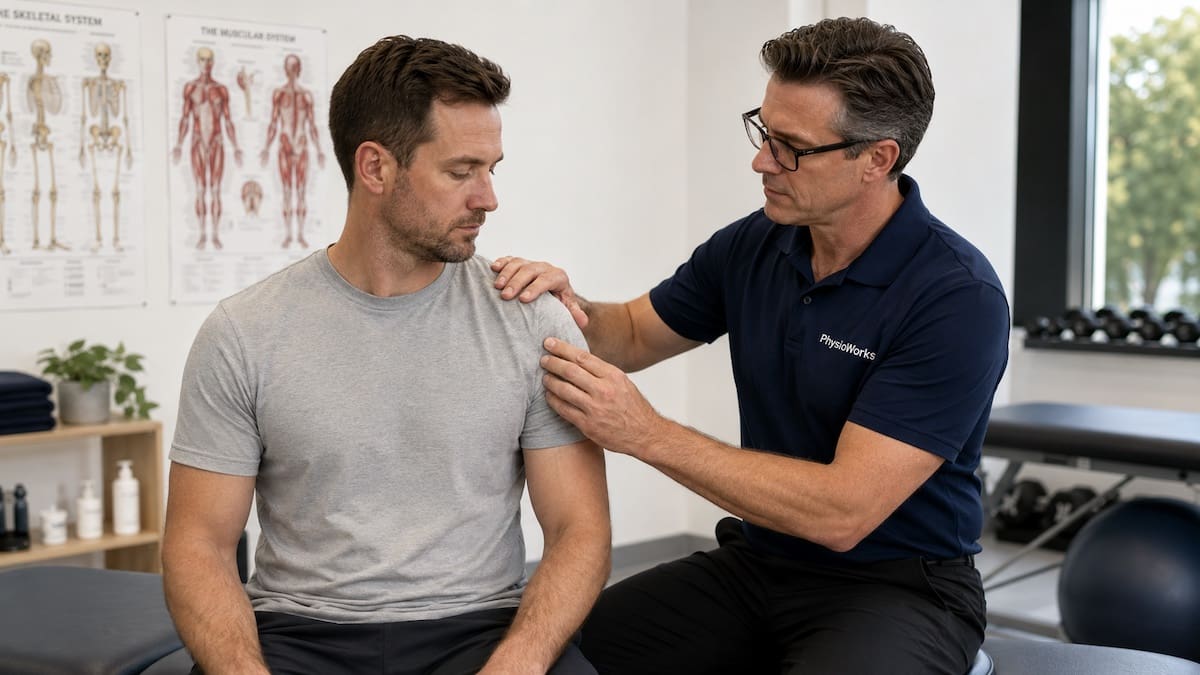
Biceps Tendinopathy Physiotherapy Treatment
Biceps tendinopathy physiotherapy helps manage pain at the front of the shoulder. It often hurts with lifting, reaching, pulling, or overhead activity. The long head of the biceps tendon works closely with the rotator cuff and shoulder blade muscles, so symptoms can overlap with other shoulder pain problems.
Symptoms may feel sharp during certain movements. The pain can then linger as an ache. Many people also notice pain when lying on the sore side or sleeping with the arm overhead.
If your pain started after training changes, heavy work, or repeated overhead tasks, reducing the painful load is a good first step. From there, strength and control can be rebuilt with a clear plan. Assessment may also check for related causes such as rotator cuff tendinopathy, shoulder impingement, or shoulder instability.
Quick Answer
Biceps tendinopathy commonly causes front shoulder pain with lifting, reaching, pulling, or overhead work. Physiotherapy often focuses on graded loading, shoulder control, rotator cuff strength, and reducing movements that keep the tendon sensitive.
What Is Biceps Tendinopathy?
Biceps tendinopathy means irritation, overload, or change in the biceps tendon. Many people still use the word “tendonitis”. However, clinicians often use tendinopathy because tendon pain can occur with or without active swelling.
- Biceps tendonitis: a more reactive or irritated tendon.
- Biceps tendinosis: longer-term tendon change.
- Biceps tenosynovitis: irritation around the tendon sheath.
- Partial or complete rupture: tendon tearing, often linked with trauma or tendon change.
Where Is the Biceps Tendon?
The long head of the biceps tendon runs through the front of the shoulder. It attaches near the top of the shoulder socket. It helps shoulder control, especially when the arm lifts, reaches, pulls, or carries load.
The tendon sits close to the rotator cuff. For this reason, it may become painful when shoulder control, strength, or load tolerance drops. Research also shows long head of biceps tendon problems often occur with rotator cuff pathology.1,2
Common Causes and Risk Factors
Biceps tendinopathy usually develops when tendon load exceeds the shoulder’s current capacity. It may build slowly with repeated activity, or it may flare after a sudden change in training, work, or sport.
- Sudden training increases or workload spikes.
- Repeated overhead lifting or reaching.
- Poor shoulder blade control during pressing, pulling, or throwing.
- Throwing, swimming, gymnastics, contact sport, or racquet sport.
- Upper back or neck stiffness that affects shoulder movement.
- Related shoulder problems such as rotator cuff tear or instability.
Load balance matters. A useful exercise load management plan can help you adjust volume, weight, range, speed, and recovery. This can help the tendon settle while strength improves.
Can You Keep Training?
You may not need complete rest. Painful overload usually needs adjusting.
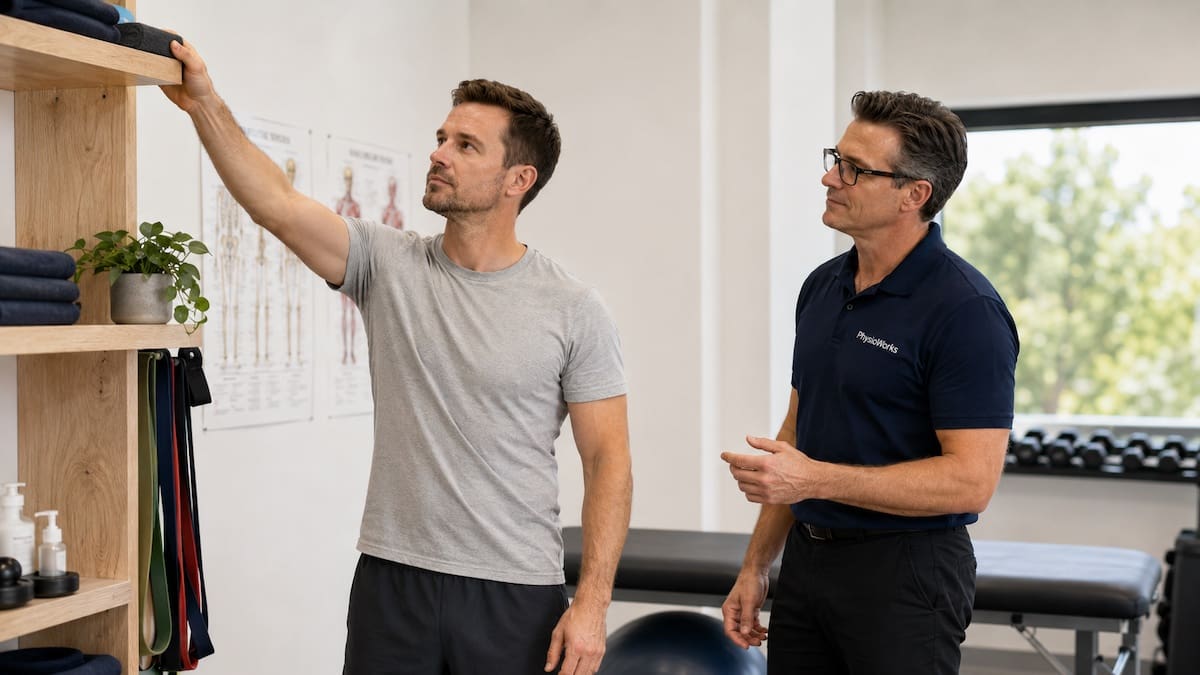
Reduce movements that create sharp pain, strong after-pain, or next-day worsening. Training can often continue with a smaller range, lighter weight, fewer sets, slower progress, or different exercises that do not flare the front of the shoulder.
Symptoms of Biceps Tendinopathy
Biceps tendinopathy often causes front shoulder pain during loaded arm movement. Symptoms vary, but they usually relate to lifting, pulling, reaching, or repeated strain.
- Pain at the front of the shoulder, sometimes into the upper arm.
- Pain with lifting, pulling, pushing, or carrying.
- Pain with elbow bending or forearm rotation.
- Clicking or snapping sensations in some cases.
- Night pain, especially when side-sleeping.
- Pain during gym, work, swimming, throwing, or overhead tasks.
Quick Shoulder Pain Guide
| Front shoulder pain | May involve the biceps tendon, but other causes are possible. |
| Pain with overhead activity | May involve the rotator cuff, biceps tendon, or shoulder blade control. |
| Sudden weakness or bruising | Needs earlier review, especially after a clear injury. |
Assessment and Diagnosis
A physiotherapist assesses shoulder movement, strength, tendon sensitivity, shoulder blade control, and related shoulder structures. The neck is also screened because neck-related pain can mimic shoulder symptoms.
Ultrasound or MRI may help when symptoms persist, several structures may be involved, or a tear is suspected. However, imaging findings do not always match pain severity. Clinical assessment remains important.3
Treatment for Biceps Tendinopathy
Treatment for biceps tendinopathy usually combines load management, exercise rehabilitation, and correction of contributing shoulder mechanics. Evidence supports a multimodal approach that rebuilds shoulder capacity rather than relying on passive treatment alone.3,4
1. Settle the Irritated Tendon
Early care aims to calm pain while keeping the shoulder moving within safe limits. This helps reduce sensitivity without letting the shoulder become stiff or weak.
- Temporary activity modification.
- Ice or heat for symptom relief.
- Sleep position changes.
- Short-term taping or strapping where useful.
- Modified gym, work, or sport tasks.
2. Rebuild Strength and Control
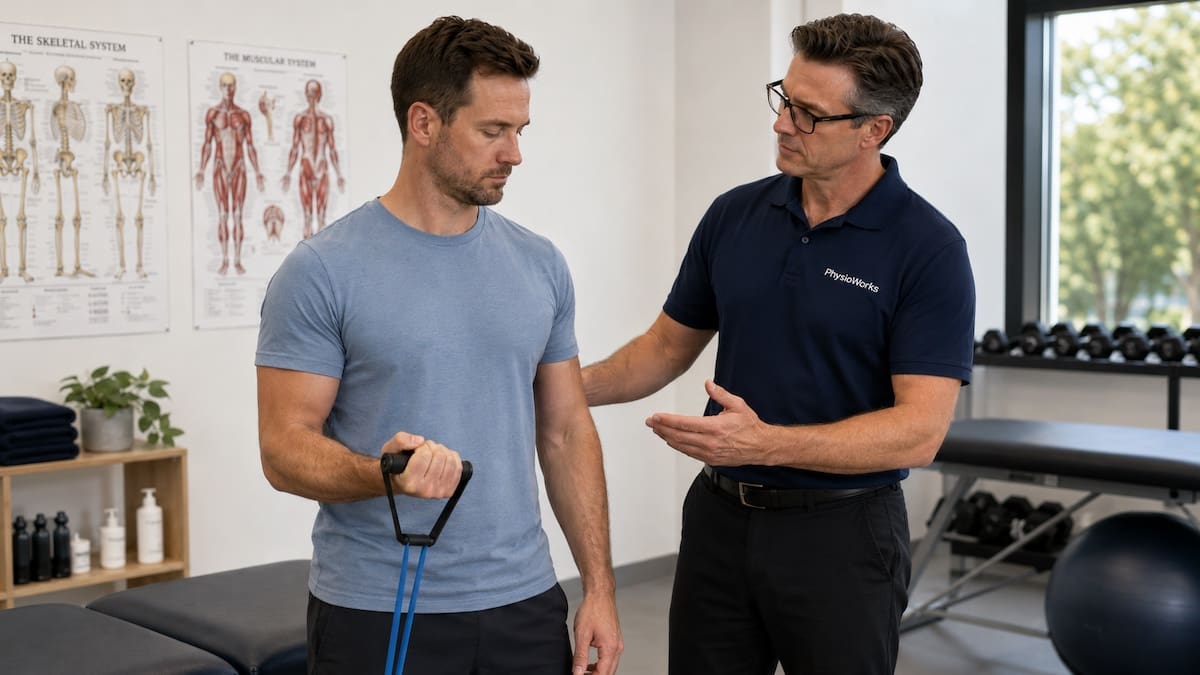
Exercise commonly includes shoulder blade control, rotator cuff strengthening, and graded biceps loading. The right starting point depends on pain level, tendon irritability, strength, and your work or sport goals.3,4
- Isometric loading for early pain-sensitive stages.
- Slow resistance training for tendon capacity.
- Rotator cuff and shoulder blade control work.
- Gradual return to pressing, pulling, throwing, or swimming loads.
See rotator cuff exercises and shoulder exercises for related shoulder rehabilitation pathways.
3. Address Related Shoulder Problems
Biceps tendon pain often sits within a broader shoulder problem. Treating the linked issue can improve the chance of a more durable result.
4. Check Neck and Upper Back Contributors
Neck or upper back stiffness can affect shoulder control and arm symptoms. Treating these regions may support shoulder rehabilitation when they contribute to the pain pattern.
Related pages: neck pain and upper back pain.
5. Consider Injections or Surgery When Needed
Some people consider injections for short-term symptom relief. Long-term improvement often relies on restoring load tolerance. In cases of significant tearing or persistent symptoms, surgical options such as tenotomy or tenodesis may be discussed with a medical specialist.5
When Should You Seek Help?
Consider physiotherapy assessment if front shoulder pain limits work, training, sleep, or daily lifting. Earlier review is also useful if symptoms are worsening or you are unsure whether the tendon, rotator cuff, neck, or another shoulder structure is involved.
- Pain persists beyond two to three weeks despite load changes.
- Night pain is increasing.
- You notice weakness, bruising, or a sudden change in arm shape.
- You cannot lift or use the arm normally after an injury.
- Sport or work demands keep flaring the shoulder.
Biceps Tendinopathy FAQs
What is biceps tendinopathy?
Biceps tendinopathy is irritation or change in the biceps tendon. It most often involves the long head of the biceps near the front of the shoulder. It may also occur with rotator cuff or shoulder control problems.
Can physiotherapy help biceps tendinopathy?
Physiotherapy may help by guiding graded tendon loading, improving shoulder control, and addressing movement or workload factors that keep the tendon sensitive. Treatment should match your symptoms, stage, and activity goals.
How do I know if my shoulder pain is biceps tendinopathy?
Biceps tendinopathy often causes pain at the front of the shoulder. It may worsen with lifting, reaching, pulling, or overhead work. A physiotherapist can assess the biceps tendon and check other shoulder structures that may cause similar symptoms.
Do I need an MRI for biceps tendinopathy?
You do not always need imaging. Ultrasound or MRI may be considered if symptoms persist, several structures may be involved, or a tendon tear is suspected. Imaging should be interpreted alongside your symptoms and physical assessment.
Should I rest completely with biceps tendinopathy?
Complete rest is not always needed. Many people do better with modified activity and gradual strengthening. Avoid sharp pain spikes, heavy repeated loading, and next-day flare-ups while rebuilding shoulder capacity.
What to Do Next
If shoulder pain is limiting your work, training, sport, or sleep, book a physiotherapy assessment. A physiotherapist can check whether the biceps tendon is the main driver and explain the most practical next step.
Book online 24/7 and choose the PhysioWorks clinic that suits you.
Choose your clinic and appointment pathway
Select a PhysioWorks clinic to continue to live booking, an appointment request or reception assistance.
Shoulder Products
These shoulder products are commonly used by our physiotherapists to improve strength, posture, movement, plus assist home exercise programs.
-
-
-

-
 Exercise Equipment, Knee, Resistance Band
POW.R Fabric Mini Loop Bands
$12.00 – $55.00Select optionsQuick View -
-
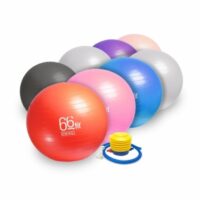
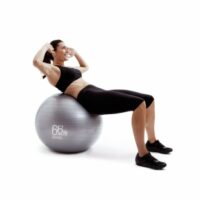 Exercise Balls, Back, Exercise Equipment, Knee, Shoulder
66fit Exercise Balls | Core & Rehab Stability Ball
$32.00 – $57.00Select optionsQuick View - Liniments & Gels, Massage Liniments, Pain Management
Fisiocrem
$16.95 – $39.95Select optionsQuick View -
-
-

- EMS Machines, Pain Management, TENS Machine, TENS Machine & EMS
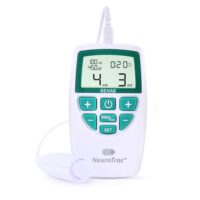
NeuroTrac Rehab (TENS Machine + EMS)
$299.95Add to cartQuick View -
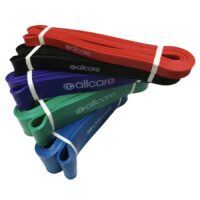
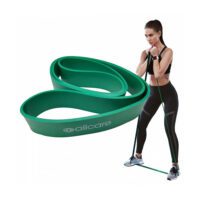 Exercise Equipment, Resistance Band
AllCare Powerloop Bands
$22.00 – $65.00Select optionsQuick View -

-
-









References
- Lalehzarian SP, Sheth U, et al. Management of proximal biceps tendon pathology. Orthop Res Rev. 2022.
- Ardebol J, et al. Long head of biceps tendon management with rotator cuff pathology. JSES Rev Rep Tech. 2024.
- McDevitt AW, Cleland JA, Addison S, Calderon L, Snodgrass S. Physical therapy interventions for long head of biceps tendinopathy. 2023.
- McDevitt AW, Cleland JA, Addison S, Calderon L, Snodgrass S. Physical therapy interventions for the management of biceps tendinopathy: an international Delphi study. Int J Sports Phys Ther. 2022;17(4):677-694.
- Hartland AW, et al. Tenotomy vs tenodesis for biceps pathology. BMJ Open. 2022.
