
Chondromalacia Patella


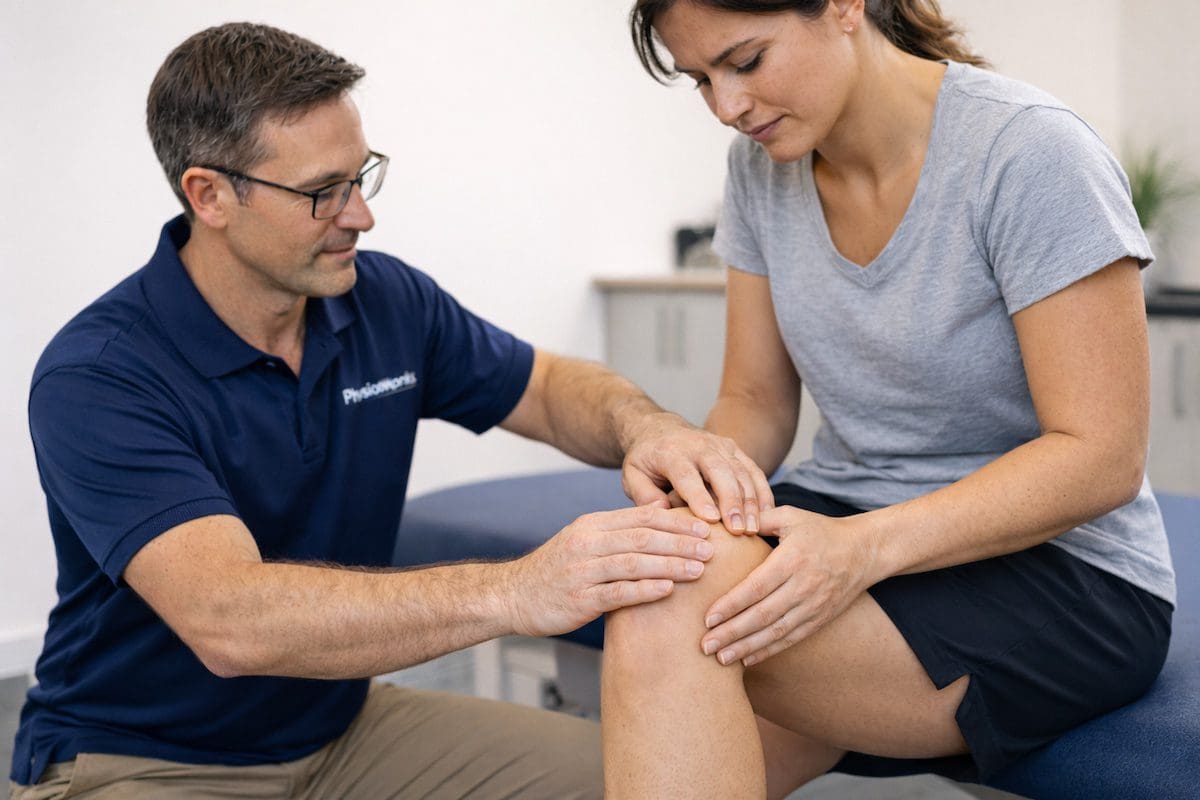
Physiotherapist assessing kneecap tracking and patellofemoral joint irritation.
Chondromalacia patella is irritation or softening of the cartilage under the kneecap that can cause front knee pain. It often hurts during stairs, squats, running, lunges, or prolonged sitting because these activities increase load through the patellofemoral joint.
This problem is one of several causes of knee pain. It commonly overlaps with patellofemoral pain syndrome (PFPS), runner’s knee, and patella maltracking. A physiotherapist can assess which structures are irritated and guide the best recovery plan.
What is chondromalacia patella?
Chondromalacia patella describes cartilage irritation or softening on the back of the kneecap. It is usually part of the broader patellofemoral pain picture rather than a completely separate injury. Many people feel pain behind or around the kneecap when the joint is repeatedly compressed during loaded bending activities.
Patellofemoral pain syndrome vs chondromalacia patella
Patellofemoral pain syndrome is the broader pain diagnosis, while chondromalacia patella refers more specifically to cartilage irritation under the kneecap. In practice, the treatment approach is often similar because both problems usually involve load sensitivity, kneecap tracking control, strength deficits, and activity modification.
| Feature | Patellofemoral Pain Syndrome (PFPS) | Chondromalacia Patella |
|---|---|---|
| Main meaning | Front knee pain from the patellofemoral joint | Cartilage irritation or softening under the kneecap |
| Pain location | Around or behind the kneecap | Usually behind the kneecap |
| Imaging | May appear normal | May show cartilage change |
| Typical aggravating tasks | Stairs, squats, sitting, running | Stairs, squats, sitting, running |
| Treatment | Exercise, load management, movement retraining | Usually the same approach |
What are the common symptoms of chondromalacia patella?
Chondromalacia patella usually causes pain behind or around the kneecap that worsens when the knee bends under load. Common triggers include stairs, squats, running, lunges, kneeling, and sitting for too long with the knee bent. Some people also notice clicking, stiffness, or reduced confidence with sport.
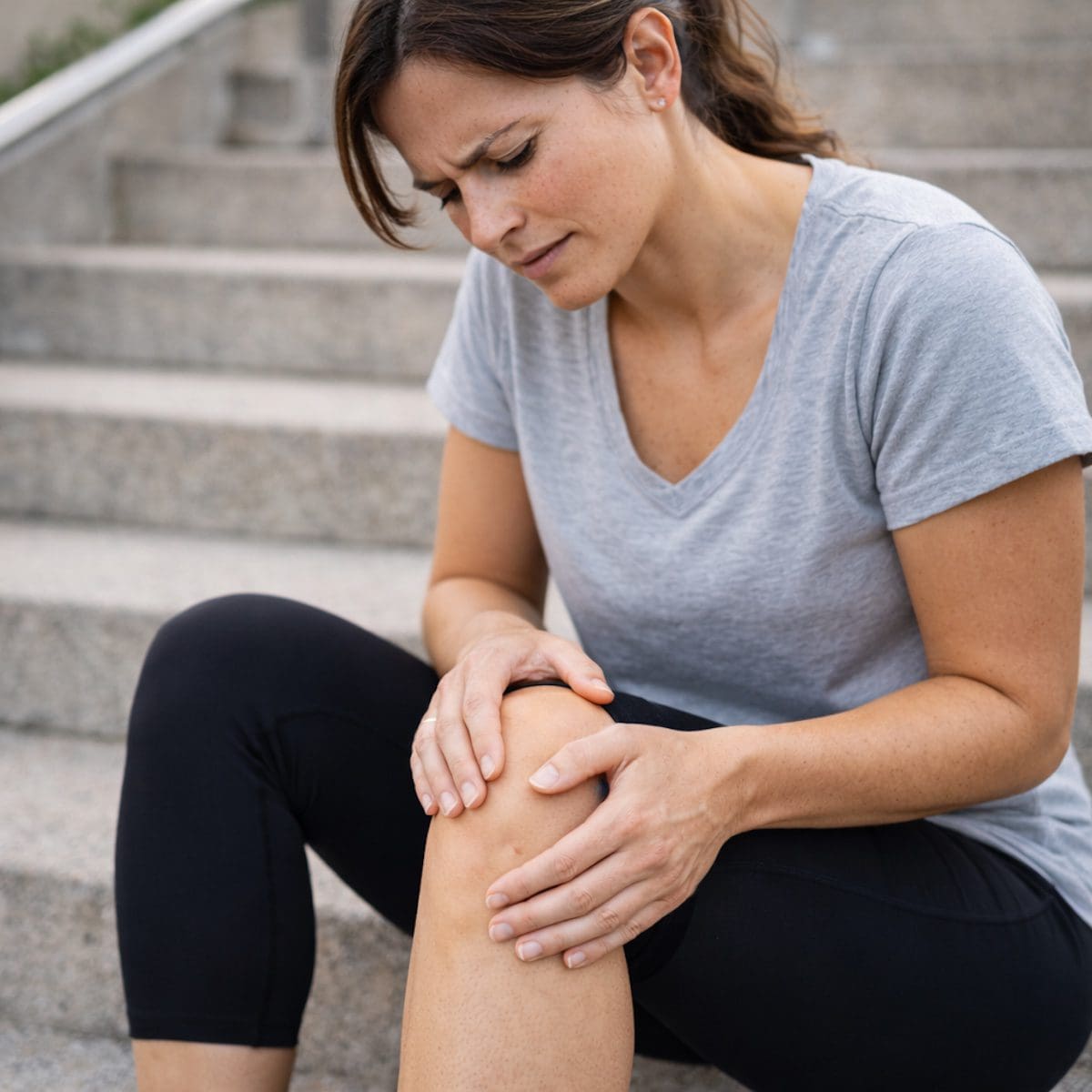
Patellofemoral joint pain often worsens during stairs or prolonged sitting.
This pattern often fits chondromalacia patella if:
- Pain sits behind or around the kneecap
- Stairs, squats, lunges, or running make it worse
- It builds with repeated loading
- Rest helps, but symptoms return with activity
- Long sitting with bent knees causes aching or stiffness
What causes chondromalacia patella?
Chondromalacia patella usually develops when repeated kneecap loading exceeds what the joint can currently tolerate. This commonly involves a mix of training overload, poor recovery, hip or quadriceps weakness, reduced lower-limb control, and altered kneecap tracking. It can also sit alongside patella maltracking, fat pad syndrome, or patellar tendinopathy.
- Training overload or sudden increases in running, stairs, hills, or jumping
- Hip, gluteal, or quadriceps weakness
- Poor single-leg control or reduced movement quality
- Repeated compression through deep knee bending
- Contributing factors such as footwear, training surface, or recovery errors
How is chondromalacia patella diagnosed?
Chondromalacia patella is usually diagnosed clinically from your symptom pattern, movement testing, and patellofemoral joint assessment. Your physiotherapist will look at stairs, squats, step-downs, running tolerance, strength, flexibility, and kneecap loading responses. Imaging is not always required, but it can be useful when symptoms are severe, persistent, or unclear.
How can physiotherapy help chondromalacia patella?
Physiotherapy helps by reducing joint irritation, improving strength, and building your knee’s load tolerance. Treatment usually combines knee exercises, hip and quadriceps strengthening, movement retraining, and smart activity progression. In some cases, short-term support such as kinesiology taping may help while strength and control improve.
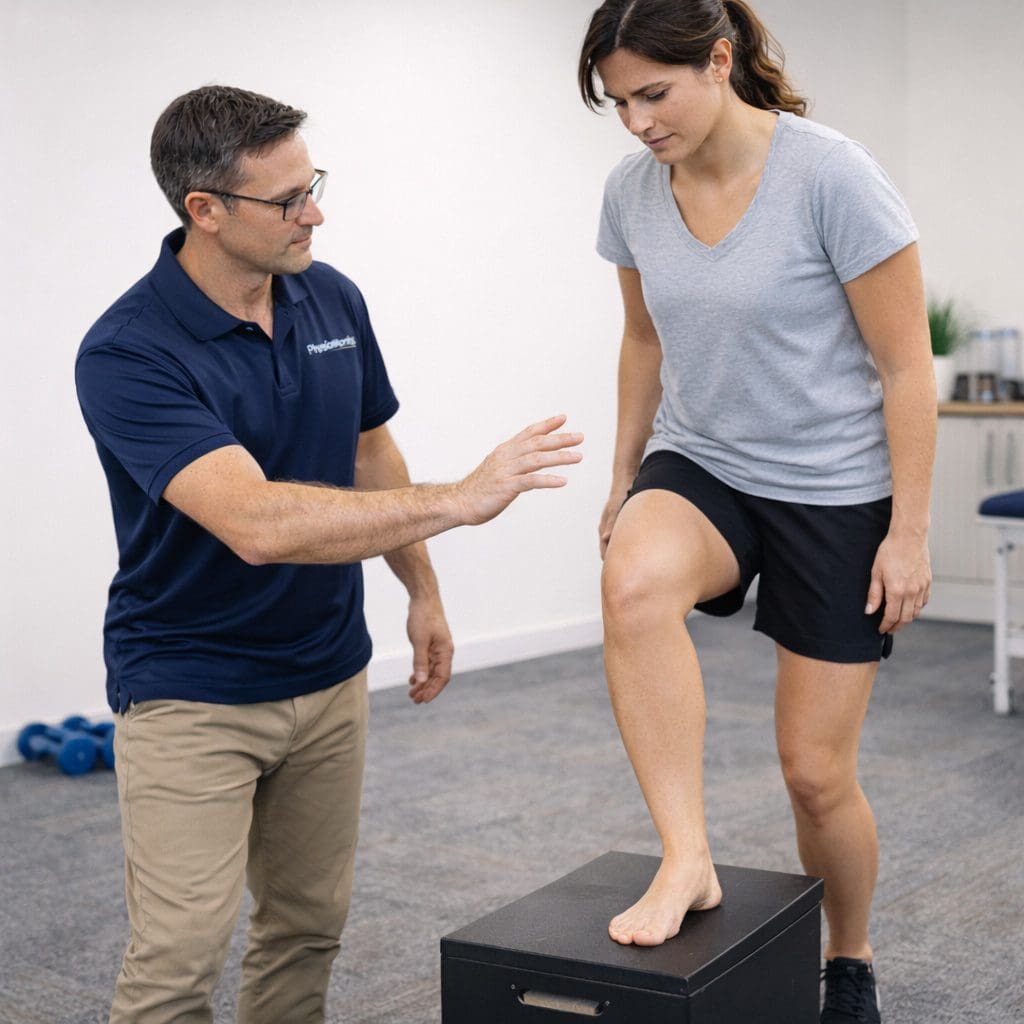
Strength and control exercises help improve kneecap loading tolerance.
What should you do next?
If your front knee pain keeps returning, an early physiotherapy assessment can help confirm whether the patellofemoral joint is the main problem and guide the right exercise progression before symptoms become more stubborn.
Can you keep running or playing sport with chondromalacia patella?
Many people can keep running or playing sport, but the load usually needs to be modified for a short period. Pain that settles quickly and does not spike the next day is often more manageable than pain that lingers or escalates. Gradual progression is usually safer than complete rest or pushing through hard flare-ups.
How long does chondromalacia patella take to improve?
Many people improve within 6 to 12 weeks, but recovery depends on symptom severity, training load, and exercise consistency. More persistent cases can take longer, especially if the problem has been present for months or if sport demands remain high. Early load management often shortens recovery.
When should you get help for chondromalacia patella?
You should get help if pain lasts more than two to three weeks, keeps returning, or starts limiting daily activity or sport. Assessment is also sensible if your knee swells, gives way, locks, or you cannot return to stairs, squats, or running without repeated flare-ups.
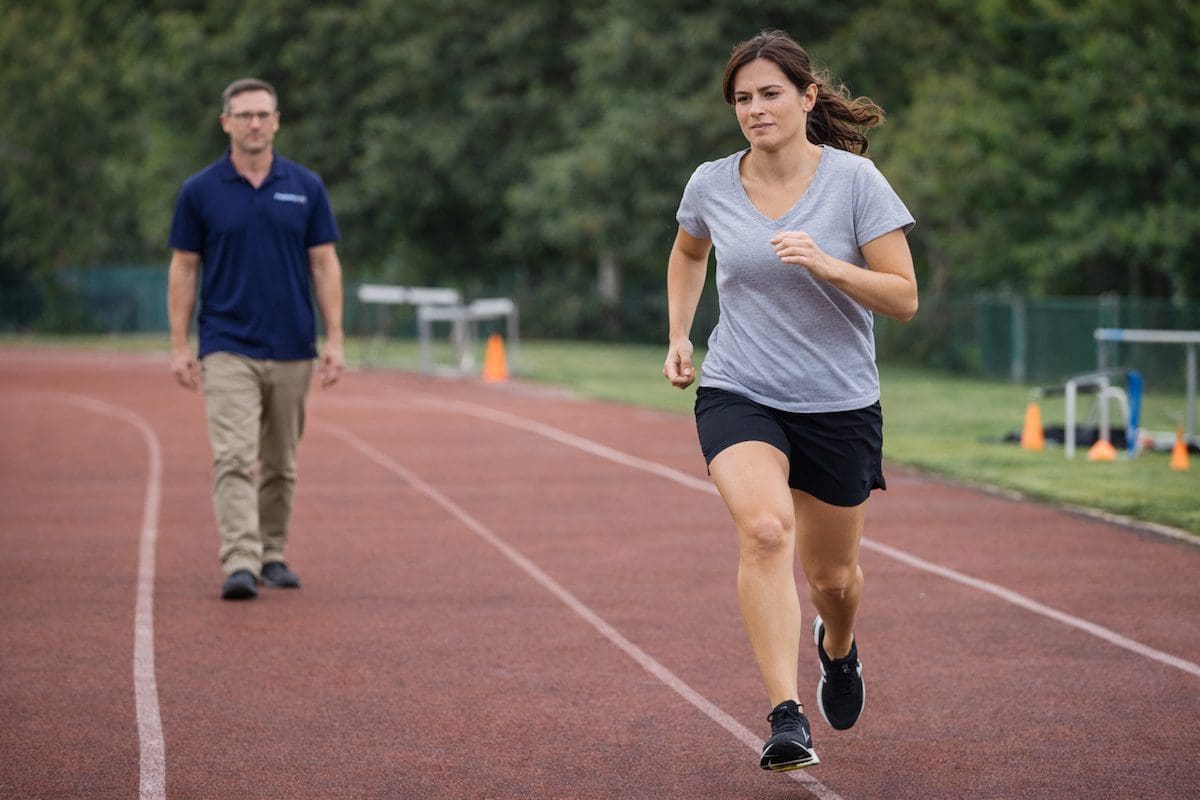
Return to running works best with graded rehabilitation and load progressions.
Related knee conditions
- Patellofemoral Pain Syndrome (PFPS)
- Runner’s Knee
- Patella Maltracking
- Patellar Tendinopathy
- Fat Pad Syndrome
- Knee Exercises
Frequently asked questions
Can chondromalacia patella heal without surgery?
Yes. Most cases improve without surgery when the irritated patellofemoral joint is managed with load modification, targeted strengthening, and a gradual return to aggravating tasks. Surgery is usually considered only after a thorough rehabilitation trial and appropriate medical review.
Is chondromalacia patella the same as runner’s knee?
They overlap, but they are not always identical terms. Runner’s knee is commonly used for patellofemoral pain, while chondromalacia patella refers more specifically to cartilage irritation under the kneecap. In practice, the treatment approach is often very similar.
Can I keep running with chondromalacia patella?
Often yes, but the amount and intensity of running may need to change for a while. If symptoms settle quickly and do not worsen the next day, a graded running plan is often possible. Persistent flare-ups usually mean the load is still too high.
How long does recovery take?
Recovery often takes around 6 to 12 weeks, although some people improve sooner and some take longer. The timeline depends on how irritable the knee is, how long symptoms have been present, and how consistently the strengthening and load-management plan is followed.
When should I seek help?
You should seek help if pain keeps returning, lasts beyond a few weeks, or limits stairs, squats, running, work, or sport. Assessment is also important if the knee swells, locks, gives way, or you are unsure whether another knee condition is involved.
Do I need a scan for chondromalacia patella?
Not always. Many cases are diagnosed clinically from the history and examination. A scan may help if symptoms are severe, persistent, unusual, or not improving as expected, but imaging findings do not always match how much pain a person feels.
Choose your clinic and appointment pathway
Select a PhysioWorks clinic to continue to live booking, an appointment request or reception assistance.
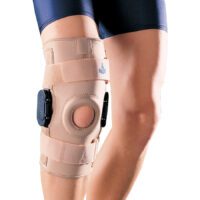
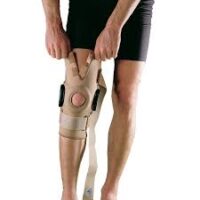
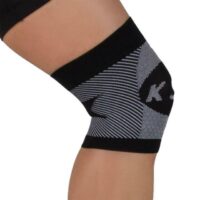
Knee Support Products
These knee support products are commonly used by our physiotherapists to help reduce strain, improve stability, and support your recovery at home.
-
-
-
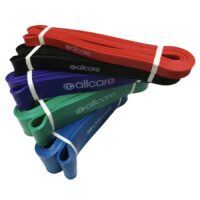
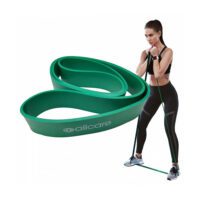 Exercise Equipment, Resistance Band
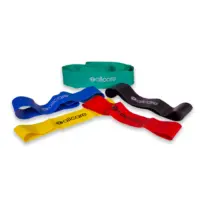
AllCare Powerloop Bands
$22.00 – $65.00Select optionsQuick View -


-
-
-

 Calf, Elbow, Ice & Heat, Knee, Pain Management
Victor Elastic Cold Sleeve
$44.00 – $60.00Select optionsQuick View -
- EMS Machines, Pain Management, TENS Machine, TENS Machine & EMS
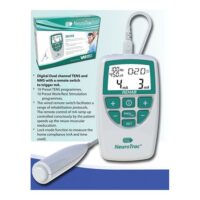
NeuroTrac Rehab (TENS Machine + EMS)
$299.95Add to cartQuick View -
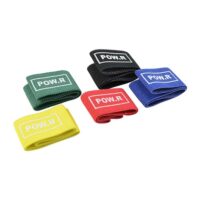 Exercise Equipment, Knee, Resistance Band
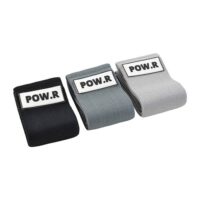
POW.R Fabric Mini Loop Bands
$12.00 – $55.00Select optionsQuick View -

 Braces & Supports, Ice & Heat, Knee, Pain Management
Victor Pro Ice Bag Wrap
$58.00Add to cartQuick View -
- Liniments & Gels, Massage Liniments, Pain Management
Fisiocrem
$16.95 – $39.95Select optionsQuick View -
- Exercise Equipment, Resistance Band
POW.R Wide Fabric Loop Resistance Band
$14.95 – $49.95Select optionsQuick View



References
- Crossley KM, Callaghan MJ, van Linschoten R. Patellofemoral pain. BMJ. 2015;351:h3939. doi:10.1136/bmj.h3939.
- Collins NJ, Barton CJ, van Middelkoop M, Callaghan MJ, Rathleff MS, Vicenzino B, et al. 2018 Consensus statement on exercise therapy and physical interventions (orthoses, taping and manual therapy) to treat patellofemoral pain: recommendations from the 5th International Patellofemoral Pain Research Retreat, Gold Coast, Australia, 2017. Br J Sports Med. 2018;52(18):1170-1178. doi:10.1136/bjsports-2018-099397.
- Willy RW, Hoglund LT, Barton CJ, Bolgla LA, Scalzitti DA, Logerstedt DS, et al. Patellofemoral Pain: Clinical Practice Guidelines Linked to the International Classification of Functioning, Disability and Health From the Academy of Orthopaedic Physical Therapy of the American Physical Therapy Association. J Orthop Sports Phys Ther. 2019;49(9):CPG1-CPG95. doi:10.2519/jospt.2019.0302.
