
Osteitis Pubis


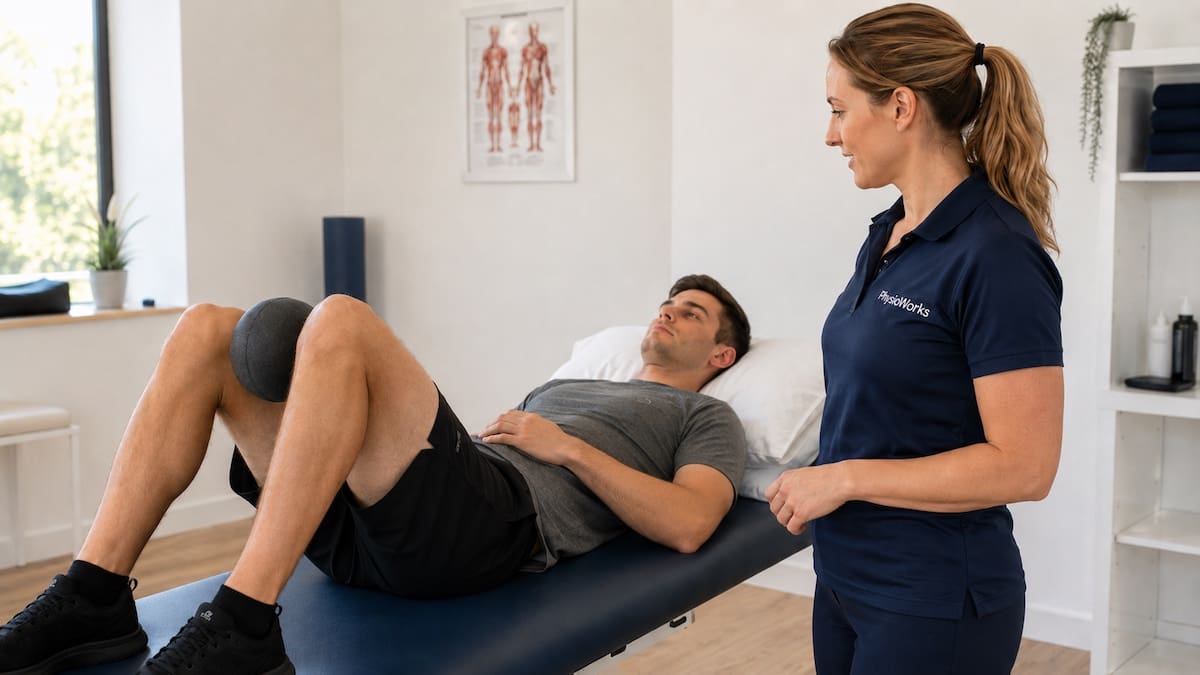
Osteitis pubis physiotherapy may help settle persistent groin pain linked to overload around the pubic symphysis, which is the joint at the front of your pelvis. This problem often affects athletes in football codes, soccer, hockey, and running-based sports.
Symptoms usually build over time. However, a sudden sprint, kick, change of direction, or heavy gym session can trigger a flare. Pain may feel sharp, burning, or like a deep ache in the centre of the groin or lower abdomen.
Because the pelvis transfers load between your trunk and legs, osteitis pubis often overlaps with other groin conditions. For example, people may also have an adductor groin strain, hip adductor tendinopathy, or hip flexor iliopsoas pain. Hip joint issues can also contribute, including FAIS hip impingement or a hip labral tear.
Quick Summary
- Osteitis pubis often causes pain around the pubic symphysis and central groin.
- Running, sprinting, kicking, cutting, sit-ups, coughing, and heavy gym work may aggravate symptoms.
- Load management, adductor strengthening, hip strength, trunk control, and staged return-to-sport planning often help.
- Early assessment may reduce repeated flare-ups and guide safer training choices.
What Is Osteitis Pubis?
Osteitis pubis describes pain and irritation around the pubic symphysis. In sport, it often behaves like a bone stress or load-tolerance problem where the area becomes sensitive when training loads rise faster than your body can adapt.
The pubic symphysis sits at the front of the pelvis. It helps transfer force between your trunk, hips, groin muscles, and legs. When running, kicking, twisting, or changing direction repeatedly overloads this region, symptoms can build.
Common Symptoms of Osteitis Pubis
Osteitis pubis symptoms vary from mild training discomfort to pain that affects walking, stairs, and daily activity. Many people report:
- pain at the front of the pelvis near the midline
- groin pain that worsens with running, sprinting, cutting, or kicking
- pain during sit-ups, coughing, or sneezing in more irritable stages
- tenderness when pressing over the pubic symphysis
- pain during resisted adductor squeeze, hip flexion, or adductor stretching
- reduced confidence when accelerating, decelerating, or changing direction
What Causes Osteitis Pubis?
The most common driver is repeated overload through the pubic symphysis. This may happen when training volume, speed, kicking load, or gym intensity increases too quickly.
Common contributing factors include:
- training load spikes, especially more sprinting, distance, kicking, or gym volume
- adductor and hip strength not matching sport demands
- trunk and pelvic control reducing with fatigue
- hip mobility restrictions shifting load into the pubic region
- previous groin strains, hip issues, or back pain changing movement patterns
- insufficient recovery between high-speed or high-kicking sessions
How Is Osteitis Pubis Diagnosed?
A physiotherapist will start with your history, training loads, and symptom triggers. Next, they assess local tenderness, adductor and hip strength, hip range, trunk control, and movement tolerance. They may also review running, cutting, or change-of-direction mechanics.
Imaging may help when symptoms persist, the diagnosis is unclear, or load tolerance remains low:
- MRI: may show bone stress, local swelling, and pubic symphysis irritation.
- X-ray: may show changes in longer-standing cases, although early stages can look normal.
- Bone scan: may show increased uptake in more advanced or persistent cases.
If your pain is severe, affects walking, or keeps flaring with small training loads, book an assessment. Early action may reduce how long symptoms linger.
Treatment for Osteitis Pubis
Most people improve with a staged plan that matches activity to tissue tolerance. In practice, this often means reducing running, sprinting, cutting, and kicking first while keeping safe movement and strength work going.
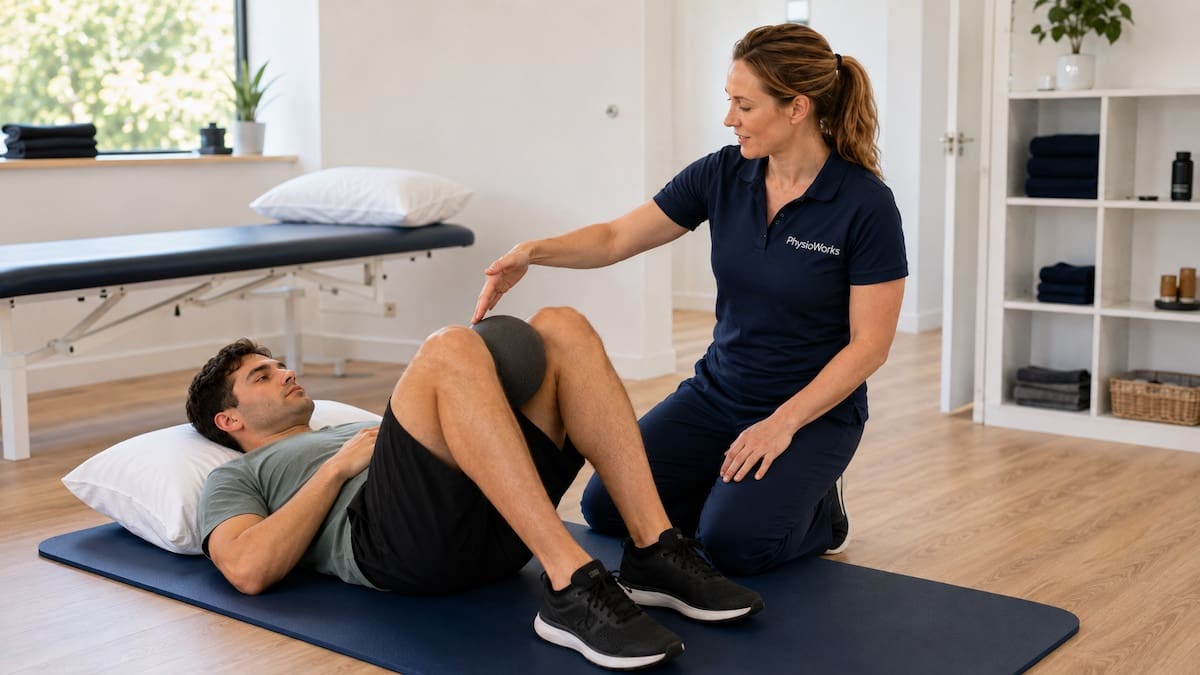
A physiotherapist may recommend:
- load modification with clear flare rules over the next 24–48 hours
- graded strengthening for adductors, hip flexors, glutes, and trunk
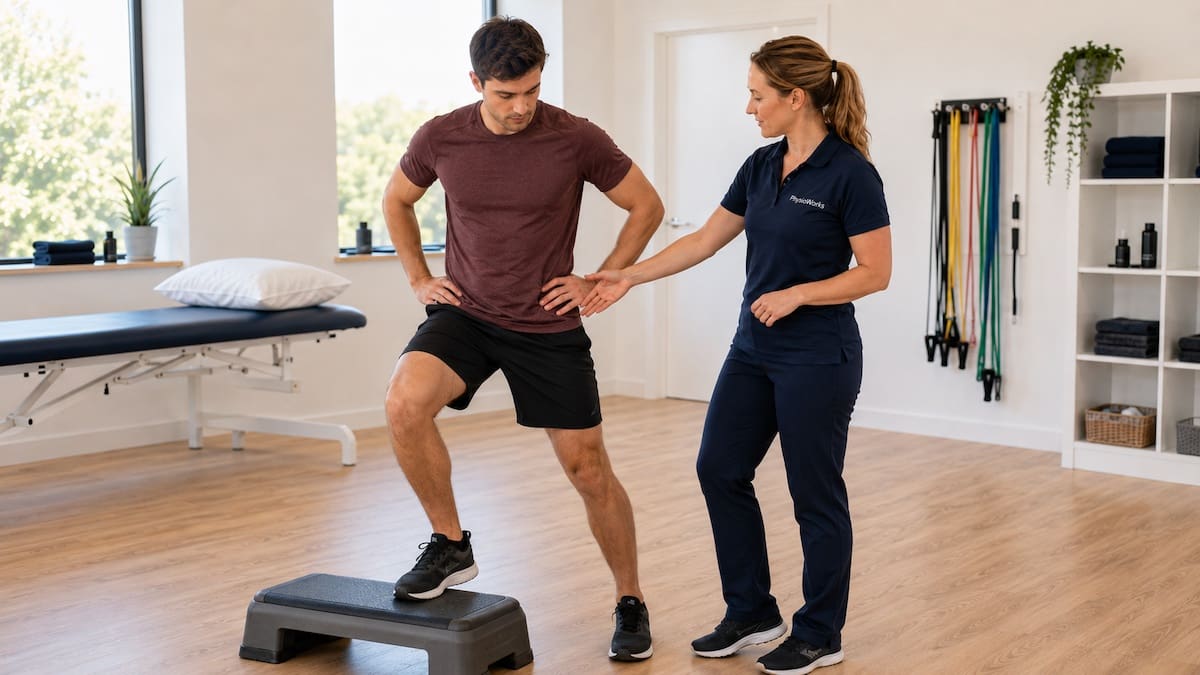
- movement retraining for deceleration, cutting, and kicking mechanics
- cross-training such as cycling, pool work, or gym options if tolerated
- return-to-sport progression with measurable steps instead of guesswork
Osteitis Pubis Rehab Progression
Rehabilitation should match your pain level, sport demands, strength, and response to load. The table below shows a typical pathway.
| Stage | Main Goal | Typical Focus |
|---|---|---|
| Settle irritability | Reduce flare-ups | Modify running, sprinting, kicking, cutting, and painful gym loads. |
| Restore control | Improve pelvic and trunk control | Start adductor isometrics, hip control, trunk control, and pain-free movement. |
| Build capacity | Increase strength and load tolerance | Progress adductor, glute, hip flexor, and running-related strength. |
| Return to sport | Rebuild confidence and performance | Reintroduce straight-line running, change of direction, kicking, and team training. |
Timelines vary. Many athletes need 8–12 weeks or longer to return comfortably, especially if symptoms have been present for months.
Why Does Osteitis Pubis Hurt When I Cough or Do Sit-Ups?
When osteitis pubis is irritable, pressure changes and trunk muscle tension can load the pubic symphysis area. That is why coughing, sneezing, and sit-ups can reproduce pain in some people. Once load tolerance improves, these triggers often settle.
Prevention Tips
These steps may reduce the risk of repeated osteitis pubis flare-ups:
- progress running and kicking loads gradually, especially in pre-season
- keep adductor strength work in your weekly plan
- train trunk control under fatigue because sport-specific conditioning matters
- address early warning pain before it becomes constant
- space high-speed, kicking, and change-of-direction sessions sensibly
- review hip mobility, strength, and running mechanics if symptoms keep returning
Related Articles
What to Do Next
If your groin pain persists for more than 2–3 weeks, keeps flaring with running or kicking, or affects walking, book an assessment. A physiotherapist can assess the likely driver, set safe training limits, and map a return-to-sport plan that suits your goals.
Booking tip: Choose an assessment if pain is affecting running, kicking, gym training, walking, or sport confidence. Bring your training history, recent load changes, and any imaging reports if available.
Choose your clinic and appointment pathway
Select a PhysioWorks clinic to continue to live booking, an appointment request or reception assistance.
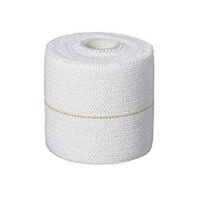
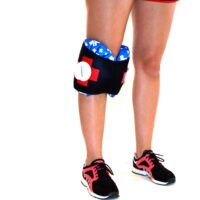
Groin Products
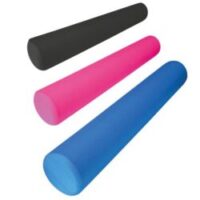
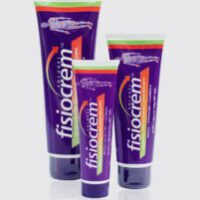
These groin products are commonly used by our physiotherapists to improve groin pain, strength, balance, proprioception, endurance and flexibility, plus assist home exercise programs.
-
-
-
- Liniments & Gels, Massage Liniments, Pain Management
Fisiocrem
$16.95 – $39.95Select optionsQuick View -
-
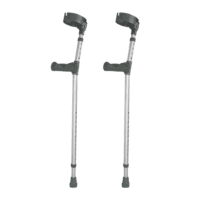 Ankle, Back, Braces & Supports, Calf, Foot, Groin, Heel, Hip, Knee, Thigh, Walking
Forearm Crutches
$64.00Select optionsQuick View -
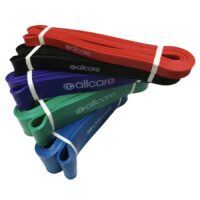
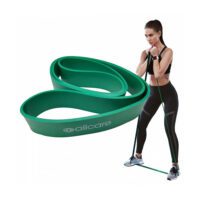 Exercise Equipment, Resistance Band
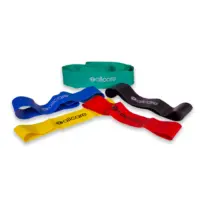
AllCare Powerloop Bands
$22.00 – $65.00Select optionsQuick View -
-
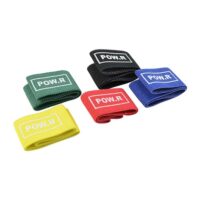 Exercise Equipment, Knee, Resistance Band
POW.R Fabric Mini Loop Bands
$12.00 – $55.00Select optionsQuick View -
-
-

-
- Exercise Equipment, Resistance Band
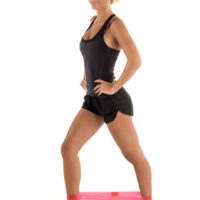
POW.R Wide Fabric Loop Resistance Band
$14.95 – $49.95Select optionsQuick View -
Frequently Asked Questions
How long does osteitis pubis take to heal?
Recovery time varies. Many athletes need 8–12 weeks or longer, especially when symptoms have been present for months. A staged plan usually works better than complete rest alone because the pubic symphysis, adductors, hips, and trunk need to rebuild load tolerance gradually.
Can I keep running with osteitis pubis?
Some people can keep light running if symptoms stay mild and do not flare over the next 24–48 hours. However, you may need to reduce speed, distance, hills, change of direction, and kicking first. If running keeps causing pain, seek a guided plan before symptoms worsen.
What does osteitis pubis feel like?
Osteitis pubis often feels like pain or deep aching at the front of the pelvis, central groin, lower abdomen, or inner thigh. It may worsen with sprinting, kicking, cutting, sit-ups, coughing, sneezing, or resisted adductor squeeze testing.
Is osteitis pubis the same as a groin strain?
No. A groin strain usually involves injury to the adductor muscle or tendon. Osteitis pubis involves pain and irritation around the pubic symphysis. However, both problems can overlap, so assessment helps identify the main pain driver and the safest rehab pathway.
What exercises help osteitis pubis recovery?
Exercises often start with pain-controlled adductor isometrics, hip strength, glute control, and trunk stability. Later stages may include Copenhagen progressions, resisted adduction, running drills, deceleration work, and sport-specific kicking or cutting progressions.
Social Media
Stay informed about groin joint, tendon and muscle health, plus recovery tips by following us on social media. Discover practical advice, exercises, and prevention strategies for maintaining your health.


References
- Mahmoud WS, Ibrahim MM, Radwan NL. Efficacy of modified active physical therapy program on pain, muscle strength, and function in adolescent football players with osteitis pubis. Bulletin of Faculty of Physical Therapy. 2024.
- Lahuerta-Martín S, et al. The effectiveness of non-surgical interventions in athletes with groin pain: a systematic review and meta-analysis. BMC Sports Science, Medicine and Rehabilitation. 2023.
- Tedeschi R, et al. Optimizing conservative management of groin pain in athletes. Life. 2025.
- Amer ML, et al. The challenges in diagnosis and management of osteitis pubis. BJUI Compass. 2022.
- de Castro Fernandes JV, et al. Comparative analysis of treatment strategies for groin and adductor region injuries in athletes: a systematic review. Apunts Sports Medicine. 2025.
