
Plantar Fasciitis


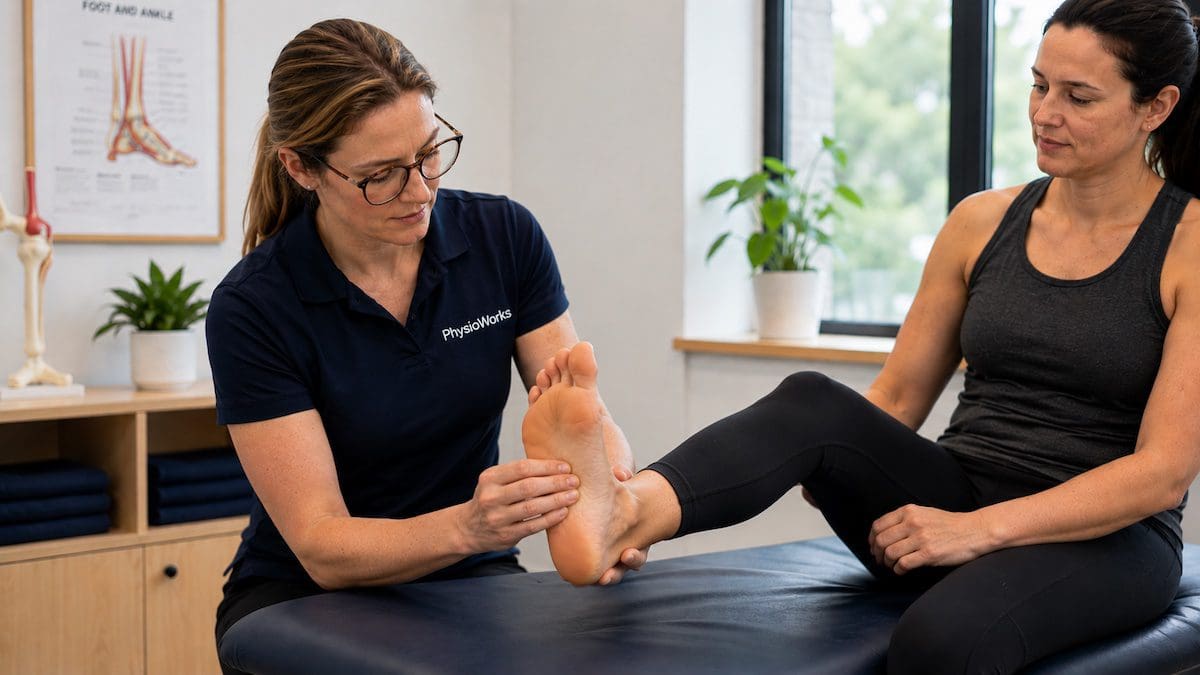
Assessing plantar fascia heel pain.
Plantar fasciitis is a common cause of pain under the heel, especially with the first steps in the morning or after rest. It occurs when the plantar fascia becomes overloaded and irritated, often due to walking, running, standing load, footwear, calf tightness, or reduced foot strength.
Plantar fasciitis is one of several causes of foot pain. It often affects runners, walkers, active adults, and people who stand for long periods at work. Related problems such as heel spurs, foot and ankle conditions, and heel pain causes can sometimes overlap.
At PhysioWorks, we assess plantar fasciitis and related heel pain presentations, then guide treatment to reduce pain, improve walking comfort, and help you return to normal activity. Treatment may include load management, stretching, strengthening, taping, footwear advice, orthoses, or shockwave therapy where appropriate.
Common signs may include:
- sharp heel pain with the first steps in the morning
- pain after sitting, driving, or resting
- soreness under the heel or arch
- worse pain after long standing, walking, or running
- reduced comfort when barefoot on hard floors
What Is Plantar Fasciitis?
Plantar fasciitis is irritation or overload of the plantar fascia, the strong band of connective tissue that supports the arch under your foot. It most often causes pain near the inside edge of the heel and can affect walking, running, work, and sport.
The plantar fascia helps absorb load each time your foot contacts the ground. When load builds faster than the tissue can adapt, the heel and arch may become painful, stiff, or sensitive to pressure.
Why Does Plantar Fasciitis Develop?
Plantar fasciitis is usually a load-related condition affecting the plantar fascia. It often develops gradually when repeated stress exceeds the tissue’s ability to cope. Although the name sounds inflammatory, many cases behave more like a tissue overload problem than a simple inflammatory flare-up.
The condition often settles with the right combination of load management, calf and foot strengthening, stretching, footwear advice, and guided rehabilitation. A physiotherapist may also consider taping, orthoses, or shockwave therapy if symptoms remain persistent.
Why Does Plantar Fasciitis Cause First-Step Heel Pain?
First-step heel pain is a classic symptom pattern of plantar fasciitis. The fascia and nearby tissues often stiffen while you rest, then become painful when suddenly loaded again with walking.
Pain may ease once you warm up, but it can return after prolonged standing, walking, sport, or a busy day on your feet. This pattern helps distinguish plantar fascia pain from some other causes of heel pain.
Common Causes of Plantar Fasciitis
Plantar fasciitis usually develops when stress on the fascia builds faster than your foot and calf can adapt. Common contributing factors include:
- sudden increases in running, walking, or standing load
- training on hard, uneven, or hilly surfaces
- calf muscle tightness or reduced ankle flexibility
- long periods barefoot on hard floors
- poor footwear choices or unsupportive shoes
- reduced foot arch control or lower-limb strength
- higher body weight or a sudden change in work demands
Some people also have related load problems such as heel spur pain, Achilles tendon pain, or weakness through the foot arch. Overuse injuries can become more stubborn when walking volume, running hills, or standing demands continue to outpace recovery.
How Is Plantar Fasciitis Diagnosed?
A physiotherapist usually diagnoses plantar fasciitis from your symptom pattern and a physical assessment. Pain is commonly localised under the heel, especially near the inside front edge of the heel bone. Your physio may assess calf flexibility, ankle movement, walking pattern, foot posture, and tenderness through the plantar fascia.
Imaging is not always needed. However, an ultrasound can be useful when symptoms persist, the diagnosis is unclear, or another cause of heel pain needs checking. Imaging may identify changes such as increased plantar fascia thickness, but scans should still be interpreted alongside your symptoms and assessment findings.
For a broader public-health overview, Healthdirect Australia also provides information on plantar fasciitis.
Plantar Fasciitis Treatment
Plantar fasciitis treatment usually works best when it addresses pain, loading, strength, mobility, footwear, and the reason symptoms keep returning. A physiotherapist can help match your treatment plan to your walking, work, sport, and recovery goals.
Education and Load Management
Treatment usually starts by reducing the activities that keep flaring your heel while maintaining as much comfortable movement as possible. That may mean changing walking distance, running volume, hill work, step count, or time spent standing.
Load management does not usually mean complete rest. Instead, the goal is to reduce painful spikes while keeping enough movement to maintain strength and confidence.
Stretching and Mobility
Plantar fascia stretches and calf stretches may help reduce morning stiffness and improve ankle movement. Stretching tends to work best when it supports a broader rehab plan rather than acting as the only treatment.
Strengthening
Progressive loading is often a key part of recovery. Exercises such as heel raises, calf strengthening, and foot control work can help the fascia and calf muscles tolerate load better over time.
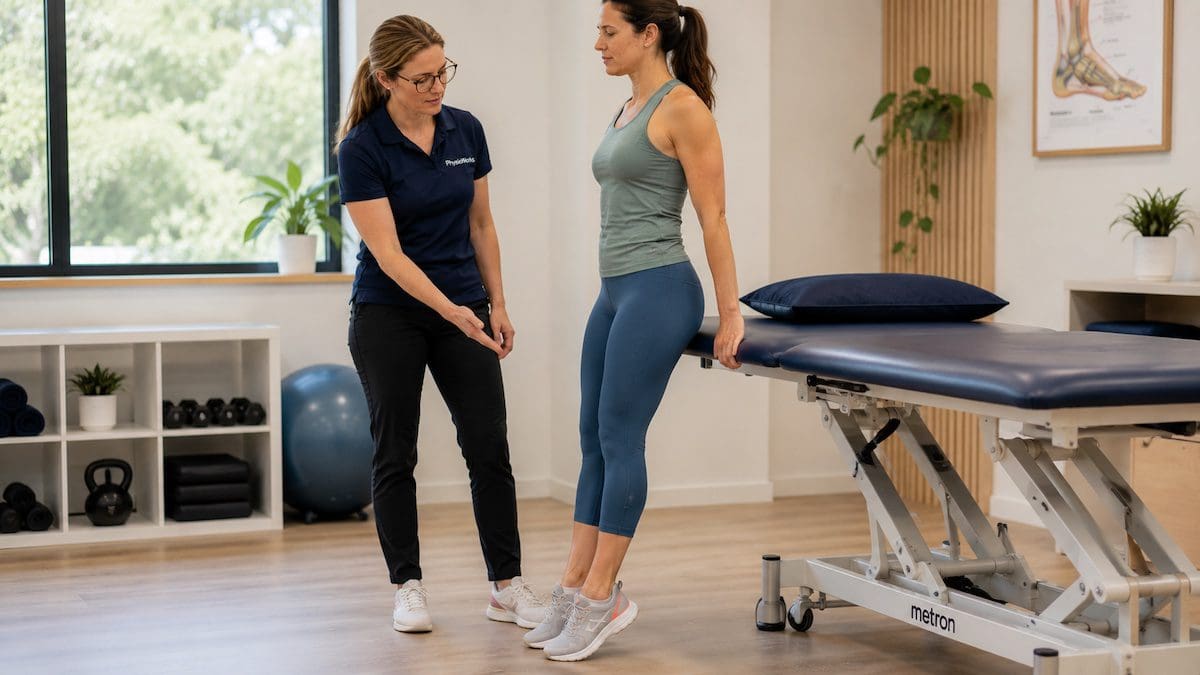
Building plantar fascia load tolerance.
Strength work becomes especially important if symptoms keep returning with walking, running, sport, or work demands. Some patients also benefit from arch control exercises such as active foot posture correction exercises.
Taping, Footwear, and Orthoses
Low-Dye taping may reduce plantar heel pain in the short term. Many people also improve with supportive footwear that cushions the heel and reduces strain through the arch.
Foot orthoses may help some people, particularly when combined with strengthening and footwear advice. Orthoses should support a broader recovery plan rather than replace it.
Gait, Running, and Movement Assessment
If plantar heel pain keeps returning with walking or running, a gait analysis or running assessment may help identify load patterns that contribute to symptoms. This can guide footwear advice, running changes, cadence decisions, and strength priorities.
Shockwave Therapy and Other Options
Shockwave therapy may suit persistent cases that have not improved with a solid rehab program. Night splints can also help reduce first-step pain in some people.
Injection options such as corticosteroid or PRP are usually considered later and only after a careful review of the benefits, risks, and alternative conservative options.
When Should You Worry About Plantar Fasciitis?
You should seek assessment if your heel pain is worsening, not improving after several weeks, limiting normal walking, or changing your gait. It is also worth checking if the pain feels unusual, spreads beyond the typical heel region, or if you are unsure whether the problem is really plantar fasciitis or another cause of foot pain.
Heel pain can sometimes reflect another issue such as a nerve irritation, fat pad problem, stress injury, or inflammatory condition. A foot stress fracture can also cause persistent foot pain and may need different load management. Early assessment helps clarify the likely cause and guide the next step.
Plantar Fasciitis FAQs
Is plantar fasciitis an inflammation problem?
Not always. Although the name suggests inflammation, many cases of plantar fasciitis behave more like a tissue overload problem. That is why treatment often focuses on load management, strength, flexibility, and footwear rather than rest alone. Some clinicians also use the term plantar fasciopathy for longer-standing cases.
How long does plantar fasciitis take to recover?
Recovery varies, but many people improve over several weeks to months with a structured physiotherapy program. More stubborn cases may take longer, especially if standing demands, running load, calf tightness, or footwear issues are not addressed. Consistent rehab usually matters more than looking for one quick fix.
Should I stop walking with plantar fasciitis?
Complete rest is usually not needed. Most people do better when they reduce aggravating loads rather than stopping all activity. Shorter walks, flatter routes, and lower-impact exercise may help keep you active while symptoms settle. A physio can guide how much walking is reasonable during recovery.
Do orthotics help plantar fasciitis?
Orthotics may help some people by reducing strain on the plantar fascia and improving comfort during walking or standing. They are often most useful in the short to medium term and tend to work best alongside strengthening, stretching, footwear changes, and load management rather than as a stand-alone treatment.
When should shockwave therapy be considered?
Shockwave therapy is usually considered when symptoms have lasted around 12 weeks or more and a solid rehab program has not been enough. It may suit persistent heel pain, especially when first-step pain remains significant. Your physiotherapist can help decide whether it is appropriate for your case.
Are heel spurs the same as plantar fasciitis?
No. Heel spurs and plantar fasciitis are related but not identical. A spur may appear on imaging even when it is not the main pain source. Many people with heel spurs have no symptoms at all, so the scan finding must be interpreted together with your history and clinical assessment.
Related Articles
- Heel Pain Causes and Treatment – Common reasons for heel pain and what may help.
- Foot Conditions – Browse common foot problems and related guidance.
- Heel Spur Pain – Learn why heel spurs and plantar fascia pain may overlap.
- Achilles Tendinopathy – A related tendon condition that may cause nearby heel pain.
- Footwear and Orthotics – Learn how orthoses may help manage plantar heel pain.
- Exercises for Strengthening the Foot Arch – Practical foot and arch strengthening ideas.
- Gait Analysis – Useful when walking or running mechanics contribute to recurring heel pain.
- Heel, Foot and Ankle Pain FAQs – Quick answers to common questions.
- Plantar Fasciitis versus Heel Spurs – How to tell the difference.
What to Do Next
If first-step heel pain, arch soreness, or ongoing foot pain is affecting your walking, work, or exercise, book an assessment with a physiotherapist. Early treatment may help settle pain sooner and reduce the risk of a longer recovery.
At PhysioWorks, we can confirm whether your symptoms fit plantar fasciitis, identify contributing factors, and guide a practical plan that may include stretching, strengthening, taping, footwear advice, orthoses, gait analysis, or shockwave therapy where appropriate.
What Should You Do If Plantar Fasciitis Is Affecting Walking?
Book an assessment if heel pain is changing how you walk, limiting work, or reducing exercise confidence. A physiotherapist can assess whether your symptoms fit plantar fasciitis, then guide load changes, footwear advice, strengthening, taping, orthoses, or shockwave therapy where appropriate.
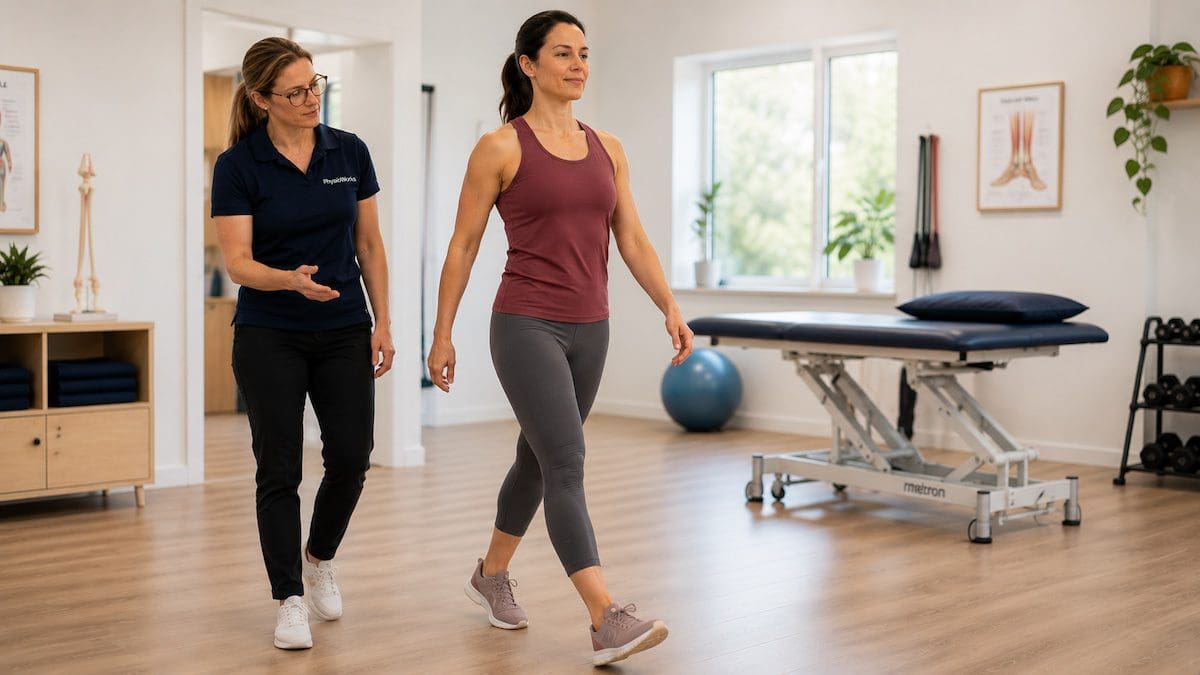
Restoring confident heel-to-toe walking.
Book an assessment if heel pain is changing how you walk.
- morning heel pain is lasting longer
- walking, work, or running tolerance is dropping
- pain keeps returning after rest
- you are unsure whether it is plantar fasciitis, heel spur pain, or another foot problem
Choose your clinic and appointment pathway
Select a PhysioWorks clinic to continue to live booking, an appointment request or reception assistance.
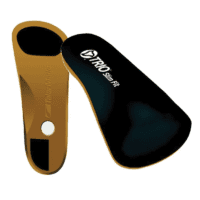
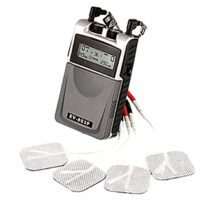
Feet Products
These feet products are commonly used by our physiotherapists to improve support, comfort, strength, balance, flexibility, and home exercise programs.
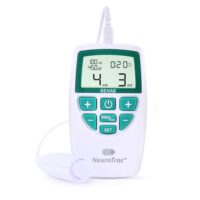
- EMS Machines, Pain Management, TENS Machine, TENS Machine & EMS
NeuroTrac Rehab (TENS Machine + EMS)
$299.95Add to cartQuick View -


-

- Liniments & Gels, Massage Liniments, Pain Management
Fisiocrem
$16.95 – $39.95Select optionsQuick View -
-
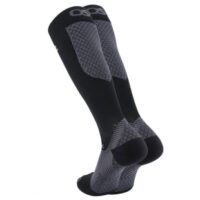 Ankle, Braces & Supports, Calf, Foot
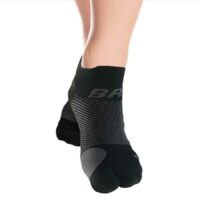
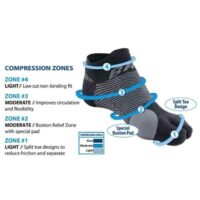
Orthosleeve Compression Bracing Socks
$49.00Select optionsQuick View -
-
-
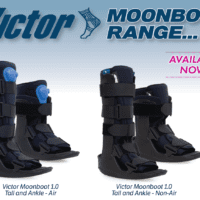
 Ankle, Braces & Supports, Foot, Walking
Victor Moonboot 1.0 Air or No Air
$77.00 – $79.00Select optionsQuick View -
-
-
-

-
-
-






Social Media
Stay informed about foot pain, tendon health, rehabilitation, and recovery tips by following PhysioWorks on social media.


References
- Martin RL, Davenport TE, Reischl SF, et al. Heel Pain–Plantar Fasciitis: Revision 2023. J Orthop Sports Phys Ther. 2023;53(12):CPG1-CPG39. doi:10.2519/jospt.2023.0303.
- Morrissey D, Cotchett M, Said J, et al. Management of plantar heel pain: a best practice guide informed by a systematic review, expert clinical reasoning and patient values. Br J Sports Med. 2021;55(19):1106-1118. doi:10.1136/bjsports-2019-101970.
- Drake C, Whittaker GA, Munteanu SE, et al. Medical imaging for plantar heel pain: a systematic review and meta-analysis. J Foot Ankle Res. 2022;15(1):4. doi:10.1186/s13047-021-00507-2.
- Heide M, Mølgaard CM, Lund H, et al. Is radial extracorporeal shock wave therapy, sham-rESWT or a standardised exercise programme with advice plus customised foot orthoses more effective than advice plus customised foot orthoses alone in plantar fasciopathy? A double-blind randomised controlled trial. Br J Sports Med. 2024;58(16):910-918. doi:10.1136/bjsports-2024-108139.