
Shoulder Impingement
Shoulder pain with lifting, reaching, gym, work or sport


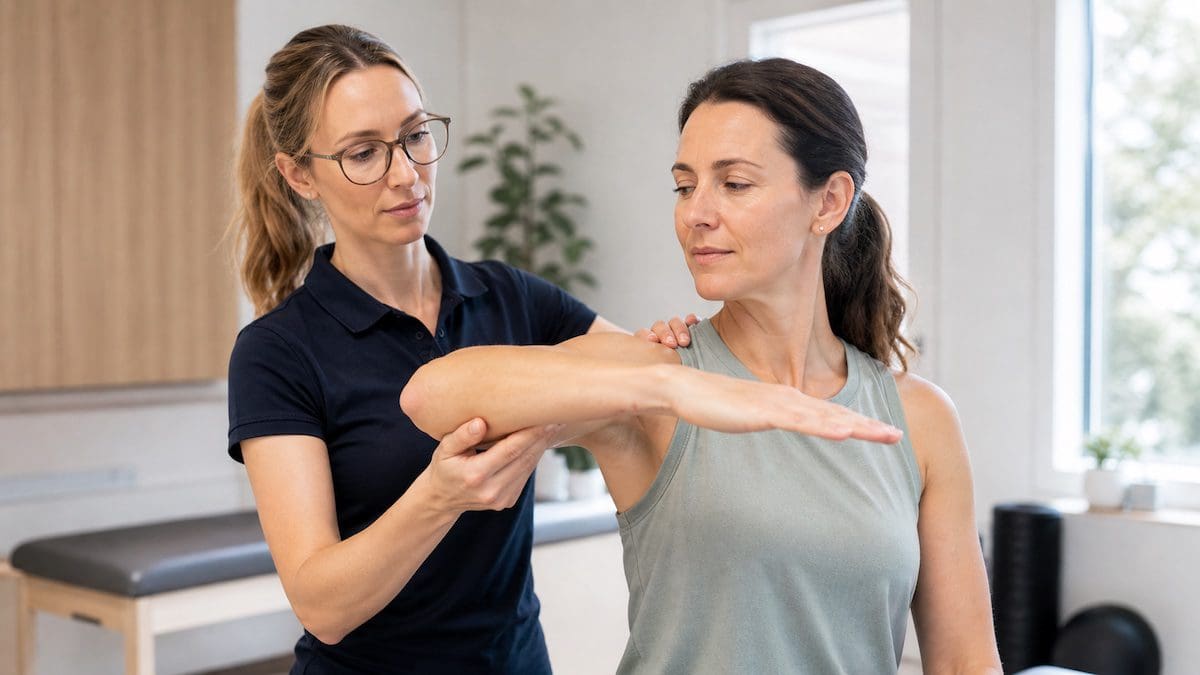
Shoulder assessment helps identify what is driving pain with lifting.
Shoulder impingement is a common cause of shoulder pain during lifting, reaching, sleeping, gym exercise, work, or overhead sport. It often involves sensitive rotator cuff tendons, the shoulder bursa, or nearby tissues as the arm moves.
Many people notice pain when reaching for a seatbelt, putting something on a shelf, exercising, or lying on the sore side. If your symptoms sit within a broader pattern of shoulder pain, a physiotherapy assessment can help identify likely causes and guide the next step.
Quick Summary
- Shoulder impingement often causes pain with lifting or overhead reach.
- Symptoms can involve the rotator cuff, bursa, shoulder blade, or load tolerance.
- Treatment usually focuses on load changes, movement, strength, and function.
- Night pain, clear weakness, trauma, or loss of movement should be assessed.
What Is Shoulder Impingement?
Shoulder impingement means shoulder pain linked with sensitive tissues in the subacromial space. This space sits under the acromion, which is part of the shoulder blade. Pain can occur when the rotator cuff tendons or bursa become irritated during arm movement.
In many cases, shoulder impingement overlaps with related problems such as shoulder bursitis or rotator cuff tendinopathy. These labels can describe similar pain patterns. Assessment should focus on what is driving your symptoms, not the label alone.
What Are the Common Symptoms of Shoulder Impingement?
Shoulder impingement symptoms often build slowly. They may change with workload, sport, sleep position, posture, and recent activity.
- Pain when lifting the arm, especially overhead
- A painful arc during shoulder movement
- Pain when lying on the affected side
- Clicking, catching, or pinching
- Reduced shoulder strength or endurance
- Pain with reaching behind the back or across the body
Why Does Shoulder Impingement Hurt When Lifting Your Arm?
Shoulder impingement often hurts with lifting because the rotator cuff and bursa become sensitive as the arm moves overhead. A quick rise in load, poor movement control, fatigue, or reduced strength can increase symptoms during shoulder elevation.
Early guidance may help if symptoms keep returning, worsen after exercise, or limit normal tasks. The aim is to calm pain, restore movement, and rebuild useful strength.
Pain Pattern Check
- Likely impingement pattern: pain with lifting, reaching, dressing, or side-lying.
- Load-related pattern: symptoms flare after gym, swimming, throwing, or overhead work.
- Review sooner: sudden weakness, major trauma, fever, severe night pain, or marked loss of movement.
Where Does Shoulder Impingement Occur?
Shoulder impingement usually involves the subacromial space between the humerus and acromion. The supraspinatus tendon is often involved. The bursa and other rotator cuff tissues may also contribute.
Pain may start with one task only. Over time, it can affect daily reaching, gym exercises, work duties, sleep, and sport.
What Causes Shoulder Impingement?
Shoulder impingement usually develops through a mix of tissue sensitivity, shoulder mechanics, strength loss, training load, posture, and recovery factors. It is rarely due to one single cause.
Structural Factors
Some people have less space beneath the acromion. Bony shape, age-related changes, or joint changes may influence the space available for the rotator cuff and bursa.
These findings do not always mean pain is permanent. Many people improve when movement, strength, and load tolerance improve.
Movement and Load Factors
Movement and load factors often matter more than scans alone. Reduced shoulder blade control, rotator cuff weakness, fatigue, sudden training increases, or repeated overhead work may increase irritation.
Gym pressing, throwing, swimming, racquet sports, manual work, or a quick spike in overhead activity can all contribute. You may also find our swimming injury and tennis injury guides helpful if your shoulder pain is sport-related.
Who Is Most at Risk?
Shoulder impingement is more common in people who repeatedly load the shoulder overhead or through larger ranges of movement.
- Swimmers and throwing athletes
- Tennis, squash, and racquet sport players
- Manual workers with overhead tasks
- Gym users doing repeated pressing or pull-up movements
- People returning to exercise after a break
If your symptoms occur during aquatic or overhead sport, see Swimmer’s Shoulder for more specific guidance.
How Is Shoulder Impingement Diagnosed?
A physiotherapist or doctor will assess shoulder movement, strength, posture, symptom behaviour, and the tasks that trigger pain. This helps identify likely causes and rule out other sources of shoulder pain.
Your assessment may include shoulder elevation tests, rotator cuff strength testing, shoulder blade movement review, and functional tasks that match your sport, work, or daily needs.
Do You Need Imaging or Scans?
Scans can help in some cases. Ultrasound may show tendon or bursa changes. MRI may show tendon tears or other structural changes. X-rays can help assess bone-related changes. However, scan findings need to match your symptoms because many people have imaging changes without major pain.
Shoulder Impingement Physiotherapy Treatment
Shoulder impingement physiotherapy aims to reduce pain, restore movement, and improve shoulder load tolerance. Treatment should match your symptoms, goals, sport, work demands, and stage of recovery.
Common treatment components include:
- Education about activity changes and load management
- Exercises to improve shoulder blade and rotator cuff control
- Gradual strength work based on symptom response
- Movement retraining for lifting, gym, sport, or work tasks
- Manual therapy where it helps pain or movement in the short term
Typical Rehab Progression
| Stage | Main Goal | Example Focus |
|---|---|---|
| Calm pain | Reduce flare-ups | Modify painful lifts and sleep positions |
| Restore movement | Improve reach | Shoulder range and blade control |
| Build strength | Improve load tolerance | Rotator cuff and shoulder blade strength |
| Return to activity | Match real demands | Gym, work, swimming, tennis, or throwing progressions |
As symptoms improve, rehabilitation usually moves from pain-calming movement to strength, endurance, speed, and overhead loading. The aim is to help the shoulder tolerate real activity, not just feel better at rest.
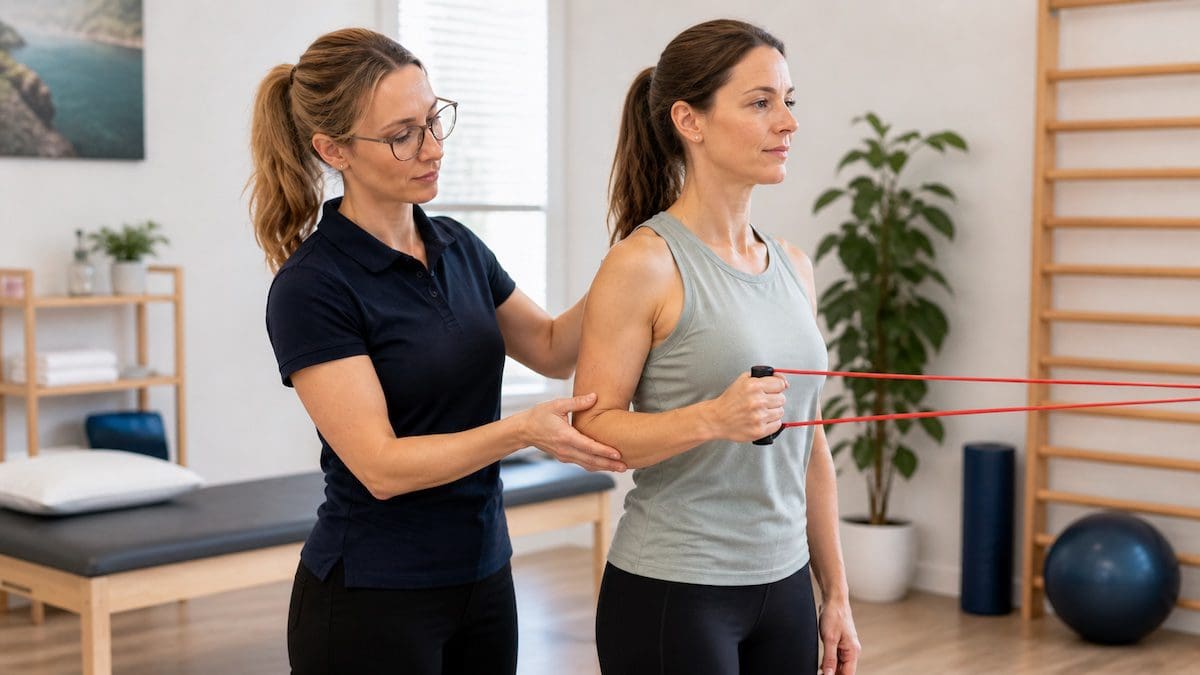
Targeted exercises can improve shoulder control and load tolerance.
Can Shoulder Impingement Improve Without Treatment?
Mild shoulder impingement may settle with short-term activity changes, reduced aggravating load, and a gradual return to movement. However, recurring or persistent symptoms often need a more structured plan.
If pain returns each time you lift, train, swim, or sleep on the shoulder, guided rehabilitation may help address strength, movement, and load factors that rest alone does not change.
When Should You Seek Help for Shoulder Impingement?
Seek assessment if shoulder pain lasts more than a few weeks, wakes you at night, causes clear weakness, limits work or sport, or keeps returning after rest.
Seek urgent medical review after major trauma, sudden loss of arm strength, marked swelling, fever, unexplained weight loss, or severe pain that does not ease.
Related Shoulder Articles
These related pages may help you compare shoulder pain patterns and choose the right next step.
- Shoulder Bursitis – bursa-related shoulder pain and irritation.
- Rotator Cuff Tendinopathy – tendon overload and shoulder strength recovery.
- Rotator Cuff Tear – tendon tears, weakness, and shoulder function.
- Biceps Tendinopathy – front-of-shoulder tendon pain.
- Frozen Shoulder – stiff, painful shoulder movement.
- Shoulder Instability – slipping, apprehension, or poor shoulder control.
- Rotator Cuff Exercises – exercise ideas for shoulder strength and control.
Shoulder Impingement FAQs
What causes shoulder impingement?
Shoulder impingement often develops from a mix of movement patterns, reduced shoulder blade control, rotator cuff weakness, workload changes, and tissue sensitivity. Structural factors may contribute, but pain usually depends on how the shoulder moves and handles load.
Is shoulder impingement the same as a rotator cuff injury?
They are related, but not always the same. Shoulder impingement describes pain during movement in the shoulder space. A rotator cuff injury refers to tendon irritation, overload, or damage. Many people have symptoms that involve both areas.
Can physiotherapy help shoulder impingement?
Physiotherapy may help shoulder impingement by improving movement, strength, shoulder blade control, and load tolerance. Your physiotherapist may also adjust exercise, work, or sport activity so the shoulder can recover with fewer flare-ups.
How long does shoulder impingement take to improve?
Recovery time varies. Some people improve within a few weeks. Others need several months of progressive rehabilitation. Timeframes depend on pain severity, strength, workload, sleep, sport demands, and how long symptoms have been present.
Should I stop exercising with shoulder impingement?
You may not need to stop all exercise. However, you may need to modify painful movements, reduce overhead loading, and rebuild strength gradually. Pain that worsens during or after exercise should be reviewed so your program can be adjusted safely.
What exercises are often used for shoulder impingement?
Exercise choices depend on your pain, strength, movement, and goals. Early options may include gentle shoulder range work, shoulder blade control, and light rotator cuff loading. Later stages may include pressing, pulling, swimming, or sport-specific progressions.
What To Do Next
If shoulder impingement is limiting your sleep, lifting, gym training, work, or sport, a physiotherapy assessment can help clarify the main drivers and set a staged plan.
Book an appointment for shoulder assessment and treatment advice. Your physiotherapist can help plan the right next step for pain relief, movement, strength, and return to activity.

Restoring comfortable reach is a key goal of shoulder rehabilitation.
Choose your clinic and appointment pathway
Select a PhysioWorks clinic to continue to live booking, an appointment request or reception assistance.
Shoulder Products
These shoulder products are commonly used by our physiotherapists to improve strength, posture, movement, plus assist home exercise programs.
-
-
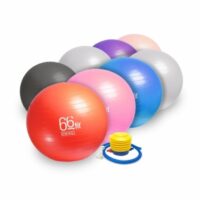
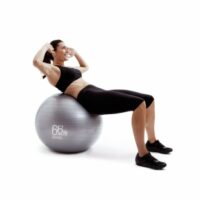 Exercise Balls, Back, Exercise Equipment, Knee, Shoulder
66fit Exercise Balls | Core & Rehab Stability Ball
$32.00 – $57.00Select optionsQuick View -
-

-

-
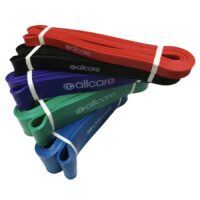
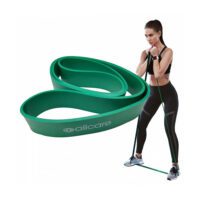 Exercise Equipment, Resistance Band
AllCare Powerloop Bands
$22.00 – $65.00Select optionsQuick View - Liniments & Gels, Massage Liniments, Pain Management
Fisiocrem
$16.95 – $39.95Select optionsQuick View -

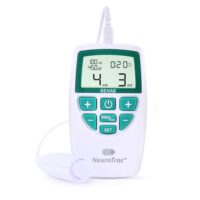
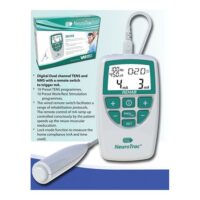
- EMS Machines, Pain Management, TENS Machine, TENS Machine & EMS
NeuroTrac Rehab (TENS Machine + EMS)
$299.95Add to cartQuick View -
-
-

-
 Exercise Equipment, Knee, Resistance Band
POW.R Fabric Mini Loop Bands
$12.00 – $55.00Select optionsQuick View -
-


Social Media
Follow PhysioWorks on social media for practical shoulder tips, exercise guidance, and injury prevention advice.


References
- Zhong Z, Ren H, Zhang Y, et al. Effect of scapular stabilisation exercises on subacromial pain syndrome: systematic review and meta-analysis. Frontiers in Physiology. 2024.
- Boland K, Smith B, Phillips J, et al. Current concepts in the rehabilitation of rotator cuff related disorders: a scoping review. International Journal of Sports Physical Therapy. 2021.
- Powell JK, Lewis JS. Rotator cuff-related shoulder pain: is it time to reframe the advice, “You need to strengthen your rotator cuff”?. Journal of Orthopaedic & Sports Physical Therapy. 2021.
- Pieters L, Lewis J, Kuppens K, et al. An update of systematic reviews examining the effectiveness of conservative physical therapy interventions for subacromial shoulder pain. Journal of Orthopaedic & Sports Physical Therapy. 2020.
- Naunton J, Harrison C, Britt H, et al. Effectiveness of progressive and resisted vs non-progressive/non-resisted exercise in rotator cuff related shoulder pain: systematic review and meta-analysis. Clinical Rehabilitation. 2020.