
Side Strain: Symptoms, Treatment and Recovery


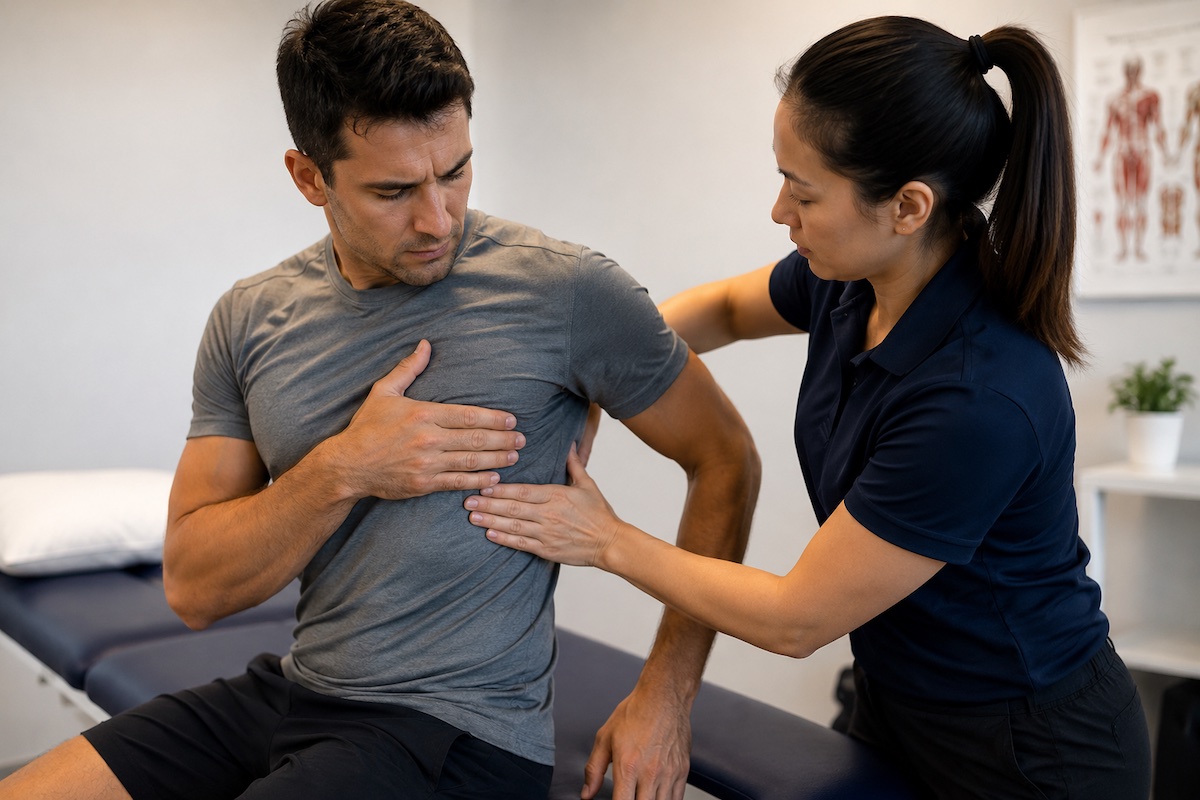
Side strain is an injury to the muscles along the side of the abdominal wall, usually near the lower ribs. It most often involves the internal oblique muscle and is particularly recognised in fast bowlers, throwers and athletes who generate force through rapid trunk rotation.
Symptoms often begin suddenly during bowling, throwing, coughing, sneezing or forceful rotation. However, pain around the ribs and side of the trunk can also come from a rib stress injury, costochondritis, the thoracic region or another soft-tissue injury.
What Is a Side Strain?
A side strain is usually an injury to the internal oblique muscle near its attachment to the lower ribs. Nearby abdominal-wall tissue and the tissues around the rib attachment can also be involved.
The internal and external oblique muscles help control trunk rotation, side bending, breathing and force transfer between the upper and lower body. During fast sporting movements, these muscles may need to lengthen while producing force.
Fast bowling is the classic sporting example. A right-arm fast bowler commonly develops symptoms on the left side during the bowling action or follow-through. Similar injuries can occur during throwing, batting, serving, rowing and other high-speed rotational activities.
For broader information about muscle injuries, see our guides to muscle strain and muscle injury diagnosis.
What Does a Side Strain Feel Like?
Side strain commonly causes sudden, sharp pain along the lower ribs or side of the abdomen. Athletes may describe a stabbing pain, catch or tearing sensation during bowling, throwing or rotation.
Common features can include:
- localised pain near the lower ribs or lateral abdominal wall;
- tenderness over the injured muscle or its rib attachment;
- pain with trunk rotation or side bending;
- pain with coughing, sneezing or deep breathing;
- reduced power during bowling, throwing or other rotational sport; and
- symptoms that return when sporting speed or load increases too quickly.
Some people develop bruising or swelling, although this is not present in every side strain.
What Causes a Side Strain?
Side strain usually occurs when the abdominal wall is exposed to a large force while lengthening and controlling trunk movement. This type of muscle loading is often described as eccentric loading.
Fast bowling places substantial rotational and side-bending demands on the trunk. Repeated high-speed efforts, fatigue and sudden increases in sporting workload may increase the overall load placed on the abdominal wall.
However, side strain does not have one proven cause. Research has not established a single strength, flexibility, technique or warm-up deficit that predicts who will develop the injury. For this reason, assessment and rehabilitation should consider the individual athlete, their symptoms, sporting demands and recent workload rather than relying on one presumed fault.
For general information about soft-tissue strains, Healthdirect provides a plain-language overview of sprains and strains.
How Is a Side Strain Diagnosed?
A physiotherapist or sports doctor will usually begin with the injury history, exact location of the pain and the movement that triggered symptoms. Assessment may include trunk rotation, side bending, resisted abdominal loading, breathing movements and sport-specific actions.
Imaging is not required for every side strain. MRI may be useful when the diagnosis is uncertain, symptoms are significant, the injury has recurred or a competitive athlete needs more detailed information to help guide rehabilitation and return-to-play planning.
MRI can help show the location and extent of a muscle injury and whether nearby tissues around the rib attachment are involved. Imaging findings still need to be interpreted alongside the athlete’s symptoms, examination and sporting demands.
Side Strain or Rib Stress Injury?
Side strain and rib stress injury can both produce pain around the lower ribs, particularly in fast bowlers. They need different management, so persistent or unclear symptoms deserve assessment.
Side strain may be more likely when
Pain begins suddenly during powerful rotation or bowling and is reproduced by loading or stretching the abdominal muscles.
Consider a rib stress injury
Focal rib pain may build with repeated bowling or training load, remain sensitive between sessions or fail to behave like a straightforward muscle injury.
These features are guides rather than self-diagnostic tests. A clinical assessment may help when the pain source remains uncertain.
How Is a Side Strain Treated?
Early management usually involves reducing the activities that reproduce sharp pain. Continuing to bowl or throw forcefully through significant pain can aggravate symptoms and may delay rehabilitation.
Initial treatment may include relative rest from the provoking activity, comfortable breathing and trunk movement, and appropriate pain-relief strategies. The goal is not complete inactivity. Instead, activity is adjusted so that the injured area can settle while useful movement is maintained.
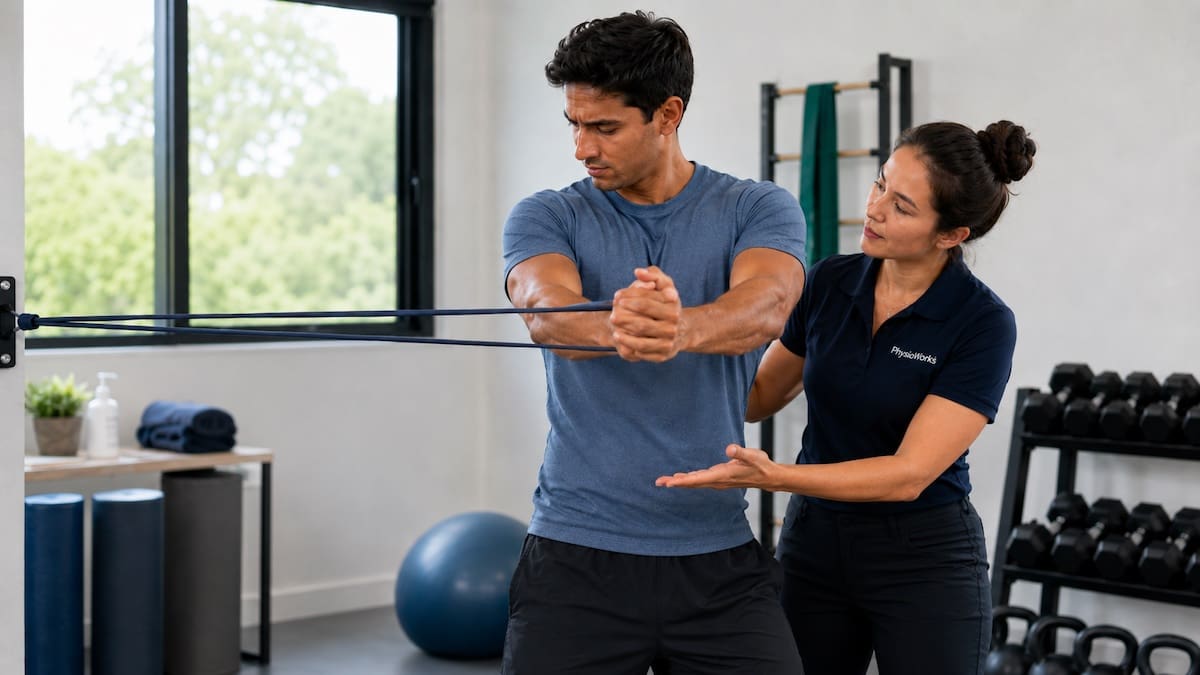
As symptoms improve, rehabilitation commonly progresses through:
- comfortable trunk movement;
- progressive abdominal and trunk strengthening;
- side-bending and rotational control;
- anti-rotation exercises;
- higher-speed trunk and whole-body loading; and
- graded return to bowling, throwing or the relevant sport.
Physiotherapy may also address movement confidence, training modification and the wider demands of the athlete’s sport. Learn more about muscle injury treatment, eccentric strengthening and sports physiotherapy.
How Long Does a Side Strain Take to Recover?
Return to sport commonly takes several weeks, but there is no single recovery time that applies to every side strain. Competitive-sport studies report considerable variation, and some injuries take longer than six weeks before full sporting demands are restored.
Recovery can be influenced by the location and extent of the injury, symptom irritability, previous side strains, strength, sporting role and tolerance of progressive training loads.
Pain settling is only one part of recovery. Before returning to full-speed bowling or throwing, an athlete should also tolerate appropriate trunk loading, sporting speed and progressive training volume.
How Do You Return to Bowling or Throwing?
Return to sport should usually follow a staged, criteria-led progression rather than a fixed date.
-
Settle irritability
Reduce painful bowling or throwing and regain comfortable breathing, walking and everyday trunk movement.
-
Rebuild trunk capacity
Progress side-bending, rotation, abdominal strength and anti-rotation control without a significant symptom flare.
-
Reintroduce sporting load
Add running, faster trunk movements, medicine-ball work and controlled throwing or bowling drills where appropriate.
-
Progress towards full performance
Build bowling or throwing speed, spell length, total volume and sport-specific intensity before returning to unrestricted competition.
Why Does Load Management Matter?
Side strain symptoms can recur if speed or training volume increases faster than the recovering tissues can tolerate. This makes gradual exposure to sporting load an important part of rehabilitation.
For fast bowlers, useful considerations can include bowling volume, spell length, intensity, competition demands, recovery between sessions and changes in training load. Rehabilitation should also prepare the whole body for the demands of bowling rather than focusing only on the painful area.
Can You Reduce the Risk of Another Side Strain?
No programme can guarantee that a side strain will not recur. However, athletes can prepare for sporting demands by maintaining appropriate trunk strength and conditioning and by progressing bowling or throwing workload gradually.
A practical programme may include rotational strength, anti-rotation control, side-bending capacity and sport-specific power. Warm-up and general physical preparation can also help an athlete prepare for high-speed activity, although they do not eliminate injury risk.
Athletes with recurrent side strain may benefit from reviewing recent workloads, rehabilitation completion, sporting technique and overall physical capacity. Our cricket injuries guide covers other injuries that can affect bowlers, batters and fielders.
Related Throwing and Trunk Injuries
Side Strain FAQs
Can you keep playing with a side strain?
Continuing to bowl, throw or perform other high-load movements through significant side-strain pain can aggravate symptoms. Reducing the provocative load early usually allows rehabilitation to begin while useful movement is maintained.
Does a side strain need an MRI?
Not every side strain needs MRI. Imaging may be useful when the diagnosis is uncertain, symptoms are significant, the injury has recurred or detailed information would help guide rehabilitation and return-to-play planning.
What movements make a side strain worse?
Bowling, throwing, trunk rotation, side bending, coughing, sneezing and forceful follow-through commonly reproduce symptoms. Deep breathing can also be uncomfortable because the abdominal wall and lower ribs move during breathing.
Is a side strain the same as a rib injury?
No. A side strain usually affects the abdominal wall, particularly the internal oblique near the lower ribs. Rib and thoracic conditions can produce similar symptoms, so assessment may be useful when the source of pain is unclear.
When should you get a side strain checked?
Arrange an assessment if pain remains significant, bruising or swelling develops, sporting movements remain limited, symptoms repeatedly return with loading or recovery is not progressing as expected. Seek urgent medical care for significant breathing difficulty, chest pressure, faintness, coughing blood, major trauma or rapidly worsening unexplained symptoms.
What to Do Next
If you think you have a side strain, reduce the movement that is reproducing sharp pain and monitor how symptoms behave during normal daily activity.
Assessment may help distinguish an abdominal muscle injury from a rib, thoracic or other trunk condition. A physiotherapist can then guide trunk rehabilitation, sporting load progression and a graded return to bowling, throwing or other high-speed activity.
Choose your clinic and appointment pathway
Select a PhysioWorks clinic to continue to live booking, an appointment request or reception assistance.


References
- Nealon AR, Kountouris A, Cook JL. Side strain in sport: a narrative review of pathomechanics, diagnosis, imaging and management for the clinician. J Sci Med Sport. 2017;20(4):333-338. doi:10.1016/j.jsams.2016.08.016
- Nealon AR, Docking SI, Lucas PE, Connell DA, Koh ES, Cook JL. MRI findings are associated with time to return to play in first class cricket fast bowlers with side strain in Australia and England. J Sci Med Sport. 2019;22(9):992-996. doi:10.1016/j.jsams.2019.05.020
- Komatsu S, Kaneko H, Nagashima M. Characteristics of internal oblique muscle strain in professional baseball players: a case series. BMC Sports Sci Med Rehabil. 2022;14:118. doi:10.1186/s13102-022-00510-5
- Tenner ZM, Lamba A, Camp CL, Griffith TB, Conte S. Abdominal oblique and rectus muscle injuries in major and minor league baseball players: an updated epidemiological review. Orthop J Sports Med. 2024;12(11). doi:10.1177/23259671241293454