
Balance Training


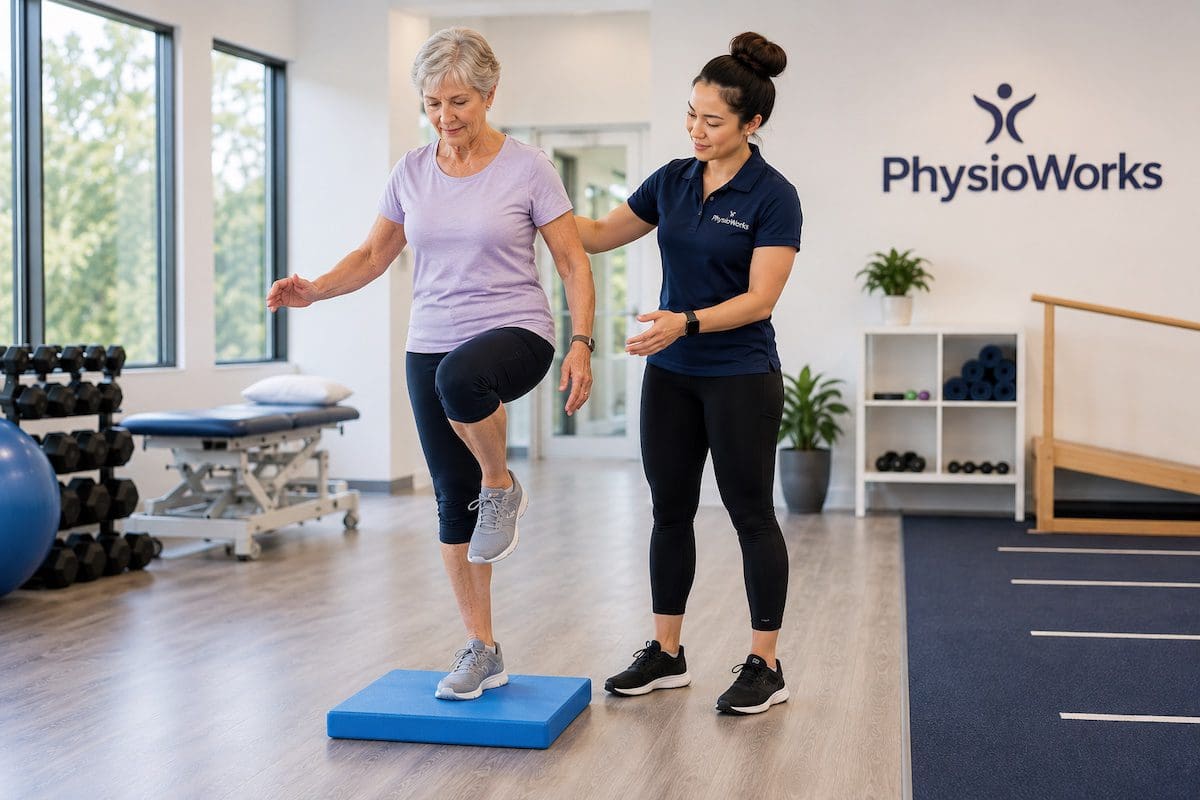
Balance training can help improve steadiness, control, and daily movement.
Balance training helps you stand, walk, turn, reach, and step with more control. It may also help lower falls risk and build trust in daily movement.
Balance problems often have more than one cause. Vision, the inner ear, leg strength, joint sense, pain, and reaction speed can all play a role. A physio can check these areas and guide a safe plan.
For more detail, visit our Balance & Proprioception hub. If dizziness is part of your problem, see our Vertigo & Dizziness page.
Quick takeaway: Balance training works on leg strength, body control, stepping reactions, and movement confidence.
What is balance training?
Balance training uses safe, graded tasks to improve steadiness, body control, stepping reactions, and walking confidence. Your brain uses input from your eyes, inner ear, muscles, joints, and feet to help keep you upright.
What affects your balance?
Balance depends on several body systems working together. If one area becomes less reliable, you may feel less steady.
- Vision helps you judge steps, edges, distance, and hazards.
- Inner ear control helps your brain sense head movement and gravity.
- Joint and muscle sense helps your body know where it is in space.
- Leg and trunk strength helps you stand, turn, step, and recover from small slips.
- Reaction speed helps you correct your balance fast enough.
Common Signs Your Balance Needs Work
- feeling unsteady when walking
- trouble standing on one leg
- worry about falling
- stumbling or drifting sideways
- dizziness or spinning feelings
- less confidence on uneven ground
Why does balance get worse?
Balance can get worse when strength, joint sense, vision, inner ear control, or reaction speed change. Pain, injury, illness, less activity, and fear after a fall can also reduce confidence.
- Vision changes can make steps and uneven ground harder to judge.
- Inner ear issues can cause dizziness, spinning, or unsteady walking.
- Reduced joint sense can make foot placement less clear.
- Muscle weakness can reduce control when standing, turning, or stepping.
- Slower reactions can make slips and trips harder to recover from.
How is balance checked?
A balance check may look at walking, standing control, leg strength, stepping reactions, mobility, dizziness symptoms, and falls risk. The aim is to find what affects your steadiness, then match exercises to your safety needs.
Read more about when to book a Balance Assessment.
What balance training exercises can help?
Balance exercises should match your current ability and risk level. Start safely, then make the task harder as your control improves.
- Steady standing drills such as supported single-leg standing.
- Walking drills such as heel-to-toe walking and turning practice.
- Strength drills such as sit-to-stands, step-ups, calf raises, and hip work.
- Reaction drills such as safe reaching, stepping, and direction changes.
- Eye and head movement drills when dizziness or gaze control is part of the problem.
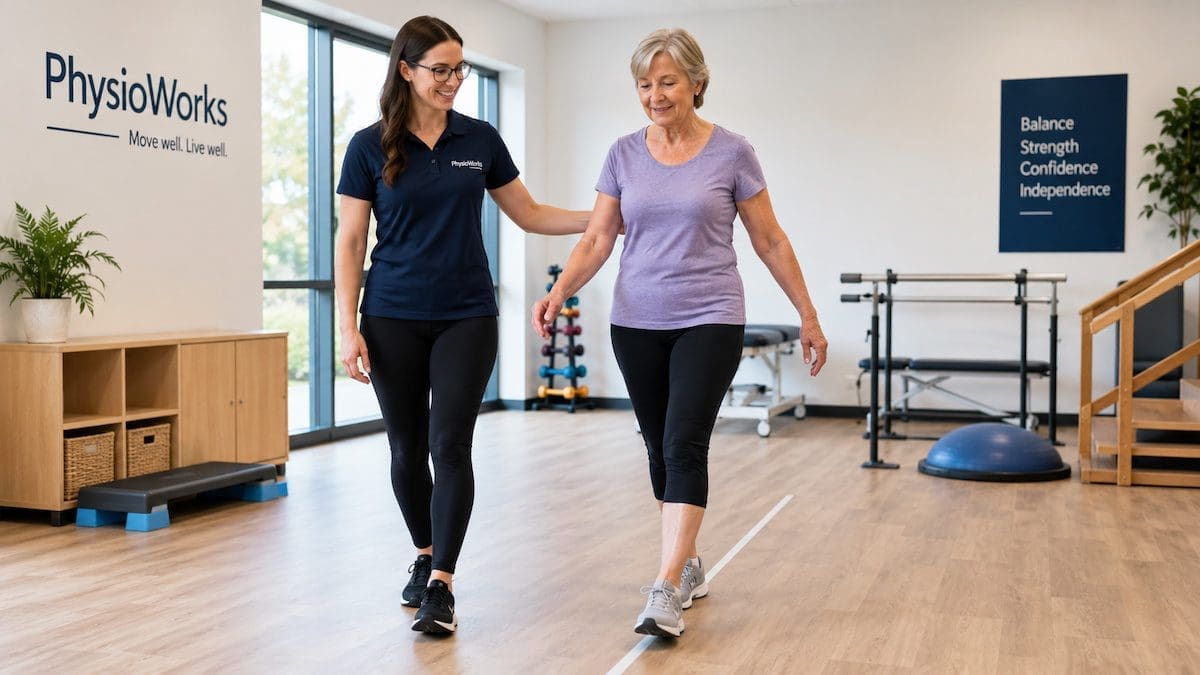
Heel-to-toe walking can challenge steadiness and stepping control.
Useful related guides include Fall Prevention and Vestibular Rehabilitation Therapy.
When Should You Consider Balance Training?
Balance training may help if you feel unsteady, have had a recent fall, avoid walking due to fear of falling, or feel less sure on stairs and uneven ground.
It may also help after injury, surgery, dizziness, illness, or a drop in activity.
Who can help with balance problems?
Different health workers may help, depending on the cause. A physio can check balance, walking, strength, mobility, dizziness, and falls risk.
- Physios check movement, strength, balance, walking, and falls risk.
- Vestibular physios help when dizziness or vertigo is a key issue.
- Exercise physiologists guide strength, fitness, and longer-term exercise plans.
- Occupational therapists can help reduce falls risks at home.
- Podiatrists check foot and ankle factors that may affect steadiness.
- GPs can check medical causes when needed.
Balance training at PhysioWorks
PhysioWorks provides balance and falls-prevention programs matched to your goals, mobility, confidence, and daily needs.
- balance and coordination training
- vestibular rehabilitation
- strength and mobility programs
- posture and walking checks
- falls-prevention advice
- confidence with daily movement
You may also find our Posture page and Balance & Falls Prevention Class page useful.
Which group class option may suit you?
A group class may suit you once your safety needs and goals are clear. The right class depends on your main problem.
Closest fit for this page: The Balance & Falls Prevention Class is the clearest class path if your main concern is unsteadiness, falls risk, or low balance confidence.
- Balance & Falls Prevention Class: for balance, stepping control, leg strength, and walking confidence.
- Bone Density Class: for low bone density, osteoporosis, osteopenia, and bone-safe strength goals.
- Hydrotherapy: for lower-load exercise when pain, stiffness, arthritis, or low confidence makes land exercise hard.
- Exercise Physiology: for a structured plan to build strength, fitness, and longer-term function.
Should you choose balance class, bone density class, or hydrotherapy?
Choose the class that matches your main goal. Balance class suits steadiness and falls confidence. Bone density class suits bone-safe strength. Hydrotherapy may suit lower-load exercise in water.
| Main goal | Suggested pathway | May suit you if… |
|---|---|---|
| Feel steadier | Balance & Falls Prevention Class | you feel unsteady, worry about falling, or avoid uneven ground |
| Build bone-safe strength | Bone Density Class | you have low bone density, osteoporosis, or osteopenia |
| Exercise with less joint load | Hydrotherapy | pain, stiffness, arthritis, or low confidence makes land exercise hard |
Start With a Check If You Are Unsure
A check is the safest first step if your symptoms are new, complex, getting worse, linked with dizziness, or linked with recent falls.
Your physio or exercise physiologist can help you choose one-on-one care, a balance class, bone density class, hydrotherapy, or another exercise plan.
Does balance training reduce falls?
Research suggests exercise programs that combine balance work and leg strength may reduce falls risk in many older adults. The program should be safe, graded, and matched to the person.
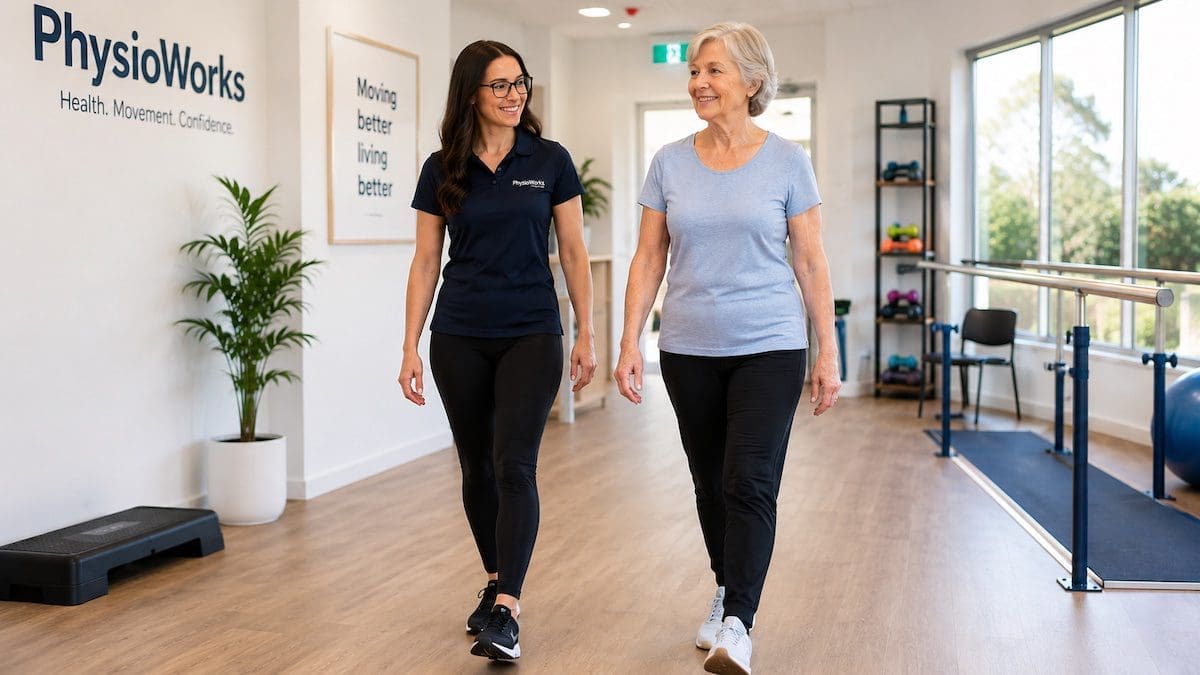
Guided balance work can support safer walking confidence.
Balance Training FAQs
Why is balance training important?
Balance training helps improve steadiness, reaction speed, leg control, and confidence with daily movement. It may also help reduce falls risk when paired with safe leg strength and walking practice.
How often should I do balance training?
Many people benefit from balance training 2 to 3 times each week. The right amount depends on your age, health, falls risk, symptoms, and goals. A physio can help set a safe starting level.
What are simple balance training exercises I can do at home?
Simple home exercises may include supported single-leg standing, heel-to-toe walking, sit-to-stands, step-ups, and calf raises. Use a bench, wall, or sturdy chair for safety. Stop if you feel unsafe, dizzy, or unwell.
When should I see a physio for balance problems?
See a physio if you have had a fall, feel unsteady, avoid tasks due to fear of falling, or your balance limits walking, stairs, sport, or daily movement. Seek urgent care for sudden severe symptoms.
Can a balance class help if I am afraid of falling?
A balance class may help if fear of falling makes you avoid walking, stairs, uneven ground, or daily tasks. It is usually most suitable when you are medically stable and can exercise safely in a small group.
Do I need a check before a balance class?
A check is wise if you have recent falls, dizziness, pain, new symptoms, low bone density, or health concerns. It helps match the class to your safety needs and goals.
What to do next
- Seek urgent medical care if balance problems are sudden, severe, linked to fainting, chest pain, severe headache, or sudden weakness.
- Book a balance check if you feel unsteady, avoid tasks due to fear of falling, or have had recent falls.
- Ask about the Balance & Falls Prevention Class if your main goal is steadiness and walking confidence.
- Ask about the Bone Density Class if low bone density, osteoporosis, or osteopenia is part of your health picture.
- Ask about Hydrotherapy if pain, stiffness, arthritis, or low confidence makes land exercise hard.
- Ask about vestibular rehabilitation if dizziness or vertigo affects your balance.
Choose your clinic and appointment pathway
Select a PhysioWorks clinic to continue to live booking, an appointment request or reception assistance.
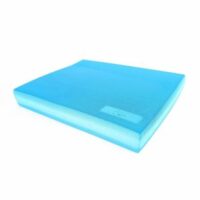
Balance Products
These balance products are commonly used by our physiotherapists to improve strength, balance, prevent injuries falls or injuries, plus assist home exercise programs.
-
-
-

 Gift Ideas, Back, Christmas Gift Ideas, Exercise Balls, Exercise Equipment, Knee, Pelvic Floor, Product Search
Pilates Balls
$13.00 – $14.00Select optionsQuick View -
-



References
- Sadaqa M, Németh Z, Makai A, Prémusz V, Hock M. Effectiveness of exercise interventions on fall prevention in ambulatory community-dwelling older adults: a systematic review with narrative synthesis. Front Public Health. 2023;11:1209319.
- Guirguis-Blake JM, Michael YL, Perdue LA, Coppola EL, Beil TL, Thompson JH. Interventions to prevent falls in older adults: updated evidence report and systematic review for the US Preventive Services Task Force. JAMA. 2024;332(1):58-69.
- Sun M, Min L, Xu N, Huang L, Li X. The effect of exercise intervention on reducing the fall risk in older adults: a meta-analysis of randomised controlled trials. Int J Environ Res Public Health. 2021;18(23):12562.
- Watson SL, Weeks BK, Weis LJ, Harding AT, Horan SA, Beck BR. High-intensity resistance and impact training improves bone mineral density and physical function in postmenopausal women with osteopenia and osteoporosis: the LIFTMOR randomised controlled trial. J Bone Miner Res. 2018;33(2):211-220.
